Commercial Kitchen Flooring Insights
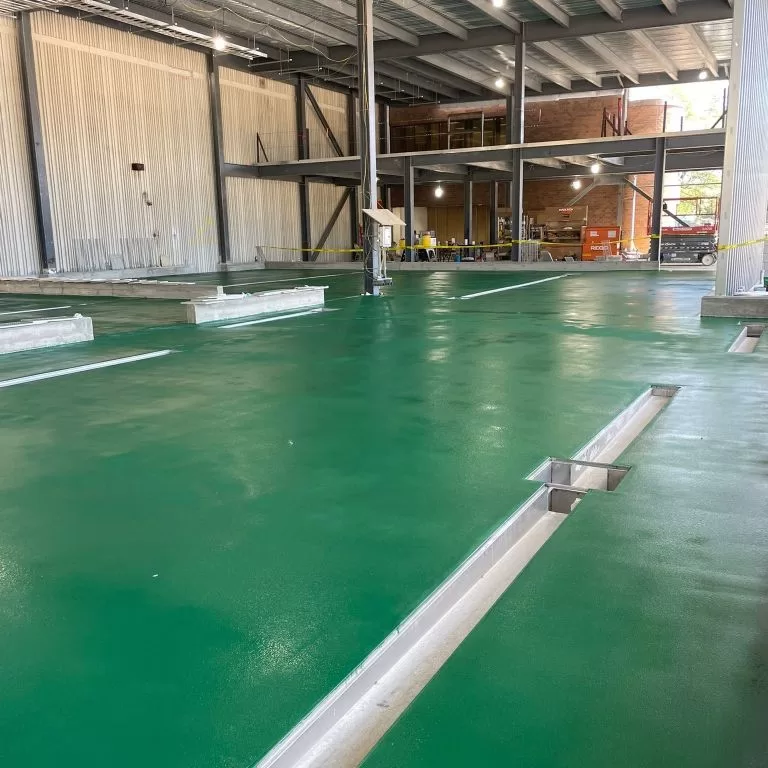
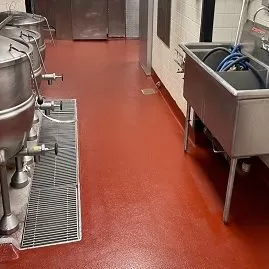
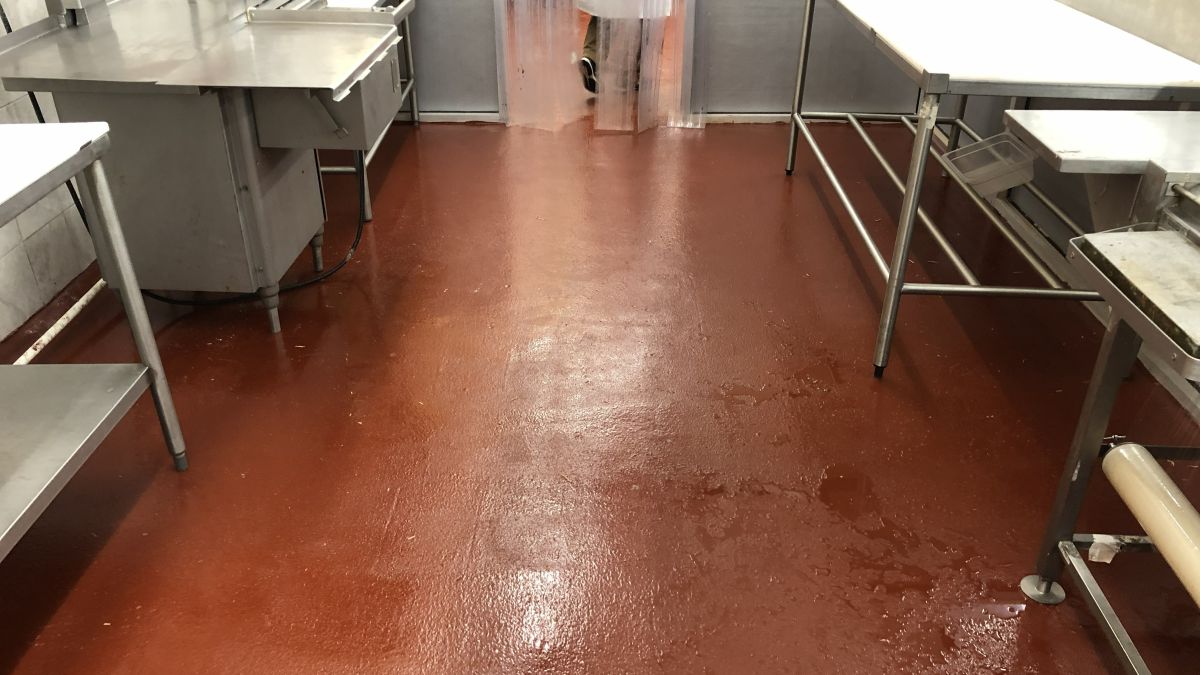
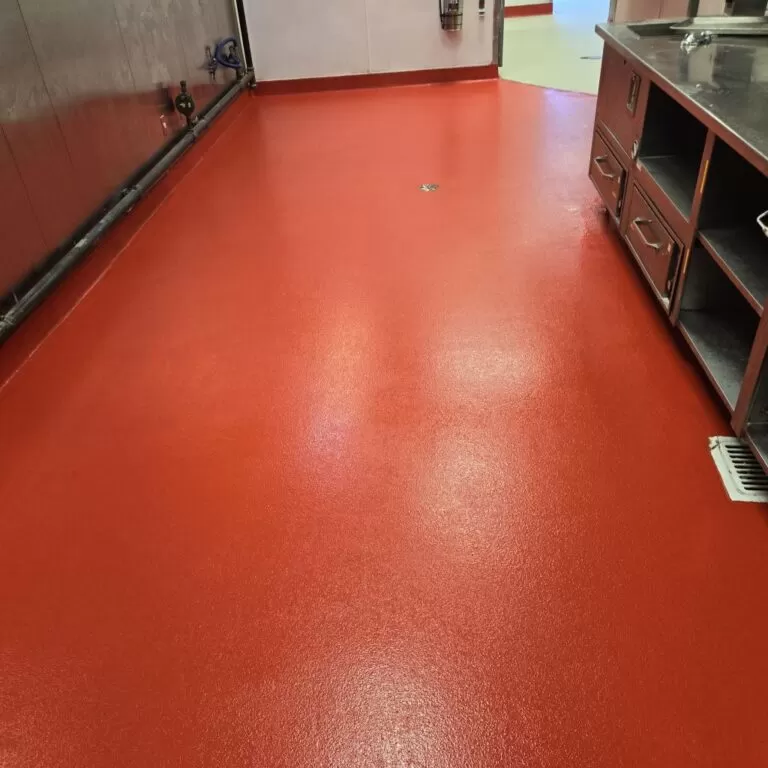
The best commercial kitchen flooring solutions resinous flooring, is an excellent choice for food service due to its exceptional durability and hygiene benefits. How does epoxy flooring perform in demanding commercial kitchens environments? In the demanding environment of a kitchen, where foot traffic is constant and spills are frequent, epoxy flooring for kitchens stands out for its resilience. What makes epoxy flooring suitable for food service areas? Its seamless, non-porous surface is resistant to stains, moisture, and bacteria, ensuring a clean and sanitary environment crucial for food service areas. Can epoxy flooring withstand harsh cleaning chemicals and high temperatures in commercial kitchens? This flooring type can withstand the harsh cleaning chemicals and high temperatures often used in commercial kitchens, ensuring it maintains its integrity and appearance over time.
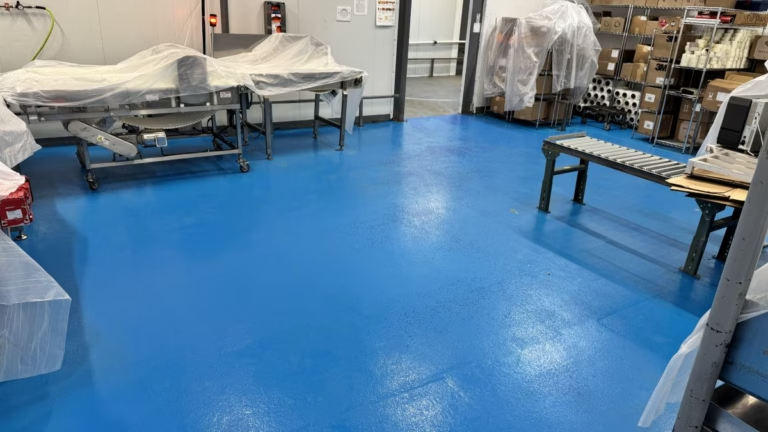
Beyond its practical advantages, resinous flooring offers significant aesthetic benefits for restaurants. What customization options are available with resinous flooring? It comes in a variety of colors and finishes, allowing restaurant owners to customize the look to match their brand and decor. How can resinous flooring enhance the dining area? This versatility can help create a visually appealing dining area that enhances the overall customer experience. Is resinous flooring slip-resistant for safety in restaurants? Additionally, resinous flooring is slip-resistant, reducing the risk of accidents in kitchens, which is essential for maintaining a safe environment for staff and patrons alike.
FAQs
Why is "thermal shock" the number one enemy of kitchen floors?
In a commercial kitchen, floors are constantly exposed to boiling water, hot oil spills, and steam cleaning. This causes “thermal shock,” where the floor surface expands rapidly while the concrete underneath stays cool. High Performance Systems highlights that standard coatings will crack or delaminate under this stress, making urethane concrete the preferred choice because it expands and contracts at the same rate as the concrete slab.
How do resinous floors help restaurants pass health inspections?
Health inspectors look for areas where bacteria and mold can thrive. Traditional tile floors have grout lines that trap grease and moisture. Resinous systems like urethane and epoxy are monolithic and non-porous, meaning there are no seams or cracks for pathogens to hide. This creates a food-safe environment that is easier to sanitize to USDA and FDA standards.
Can the floor's slip resistance be customized for specific kitchen zones?
Yes. Safety is a major liability in kitchens due to frequent spills. These systems can be integrated with various anti-slip aggregates (such as quartz or aluminum oxide) to provide the exact level of traction needed. A coarser texture is typically used in heavy-grease “hot lines,” while a finer texture may be used in dry storage or prep areas to balance safety with ease of cleaning.
What is the benefit of a "high-build" system over a simple coating?
In a busy kitchen, a thin “paint-like” coating will quickly wear away under heavy foot traffic and sliding equipment. A high-build system (typically 3/16″ to 1/4″ thick) provides a durable wear-layer that can withstand heavy impacts from dropped pots and the weight of rolling racks, significantly extending the floor’s lifespan compared to cheaper alternatives.
How do integrated cove bases improve kitchen hygiene?
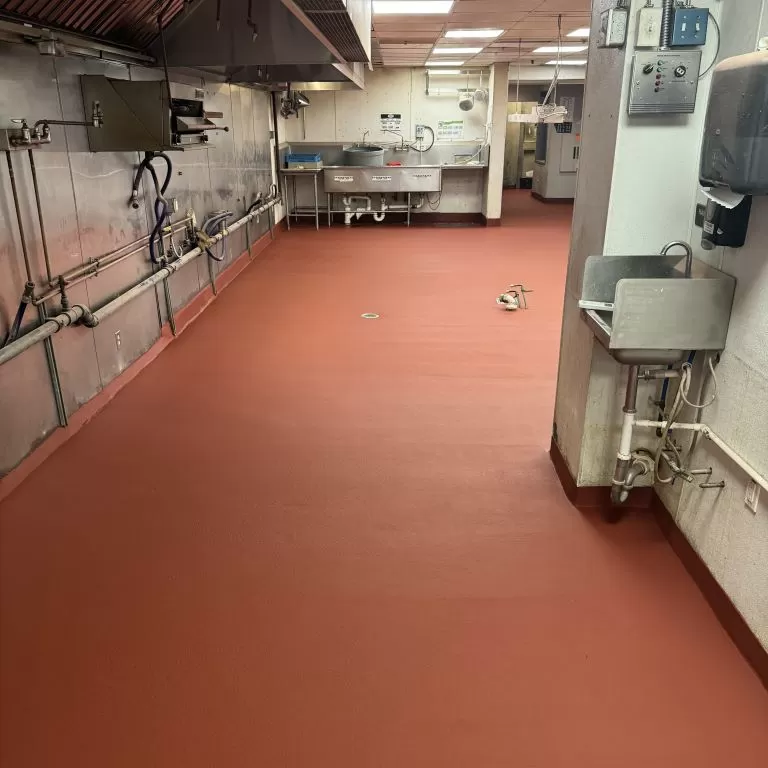
One of the most valuable insights for kitchen managers is the use of an integral radius cove base. This is where the flooring material is troweled up the wall to create a smooth, curved transition. This eliminates the 90-degree corner where dirt, grease, and water typically collect, allowing for a much more effective and faster wash-down at the end of a shift.