...

Seamless Liquid Flooring Systems: Eliminating Pathogen Harbors in Food Processing

Transforming Passive Concrete into an Active Tool for USDA & FDA Compliance.

In a modern USDA-compliant kitchen environment, your floor is the first line of defense. Traditional quarry tile and porous concrete are breeding grounds for Listeria and Salmonella. Our liquid flooring systems—engineered from industrial-grade urethane cement—create a single, non-porous barrier that ensures cleaning chemicals reach every millimeter of the surface.

The Danger of Porous Substrates and Grout Lines

  • The Hidden Risk: Even the best sanitation crews can’t reach bacteria trapped inside concrete pores or failing grout.

  • Thermal Shock: Constant hot-water washdowns cause standard epoxy to peel. Our systems are designed to expand and contract with the concrete.

  • Chemical Exposure: We use resins specifically tested against the harsh degreasers and sanitizers used in high-volume food production.

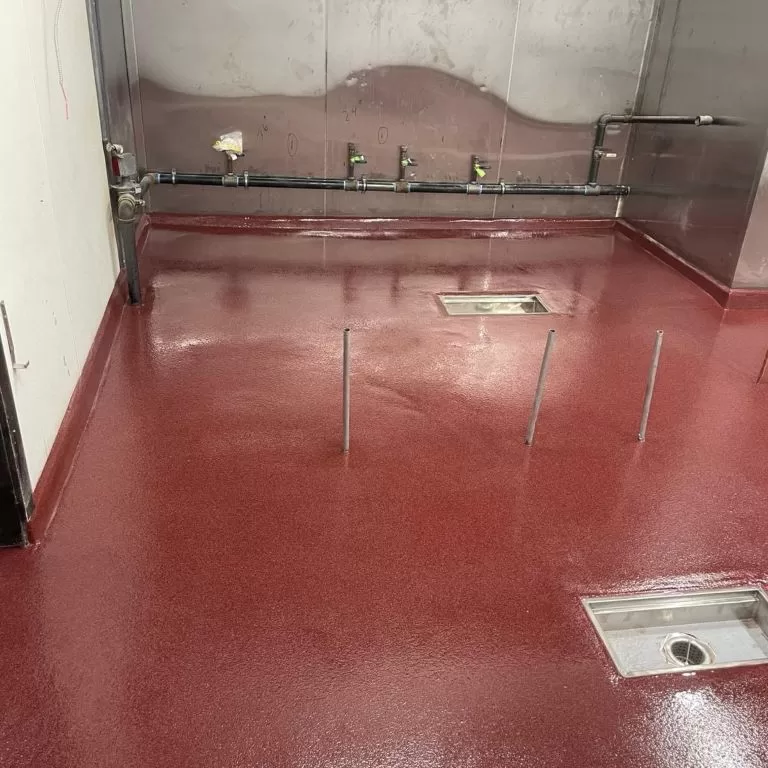
Professional installation of heavy-duty industrial flooring systems in a commercial manufacturing facility.
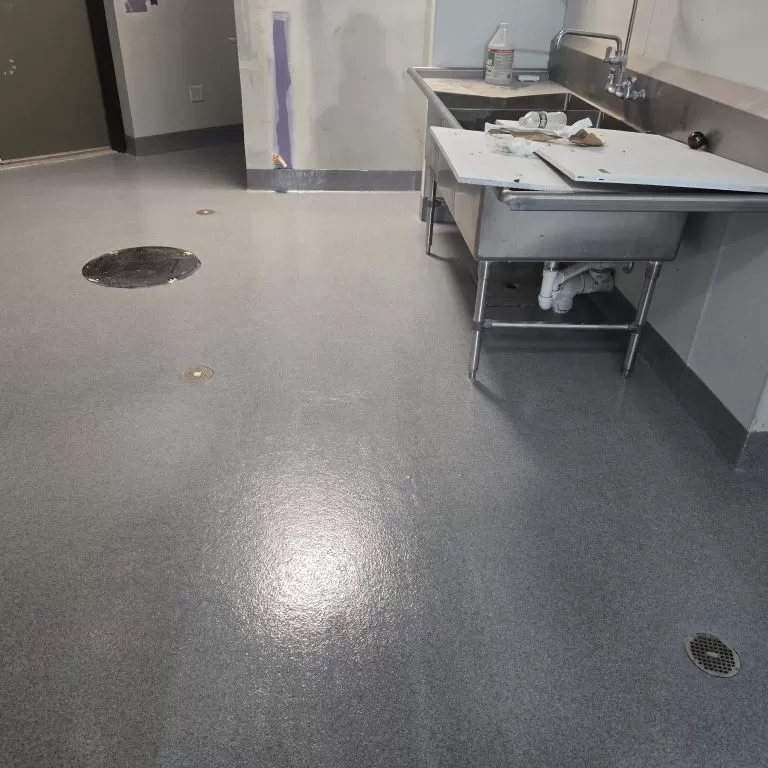
Professional installation of industrial liquid flooring systems for a high-traffic commercial kitchen.

Professional Preparation & High-Performance Execution

  • Mechanical Profiling: We don’t just “paint” floors. We use 800-pound planetary grinders to achieve the precise Concrete Surface Profile (CSP) required for a permanent chemical bond.

  • Integral Cove Base: We eliminate the 90-degree angle between the floor and wall where water pools, creating a seamless “bathtub” effect that makes washdowns 100% effective.

  • Industry Authority: As certified contractors serving the Tri-state area since 1988, we understand the scheduling pressures of active plants and work around your production shifts.

Case Study: Restoring Food Safety in Paterson, NJ

Project Overview: High-Traffic Commercial Kitchen Restoration

We recently completed a comprehensive flooring overhaul for a high-volume commercial kitchen in Paterson, NJ. The facility was struggling with failing floor coatings and porous concrete that threatened their upcoming health department and USDA audits.

The Challenge: The existing floor had significant “pitting” and cracked grout lines that were trapping moisture and organic debris. The client needed a solution that was 100% waterproof, slip-resistant, and capable of withstanding heavy daily washdowns with industrial degreasers.

Our Solution:

  • Mechanical Prep: We utilized our 800-pound planetary grinders to remove the failing layers and open the concrete pores for maximum adhesion.

  • System Choice: We installed a heavy-duty urethane cement system with an antimicrobial topcoat.

  • Sanitary Detail: We integrated a 4-inch cove base, effectively turning the floor and wall junction into a seamless, easy-to-sanitize curve.

The Result: The facility passed its inspection with zero flooring-related citations. The kitchen staff reported a 30% reduction in cleaning time, and the seamless finish eliminated the odors previously caused by bacteria trapped in the old floor’s cracks.

FAQs About Liquid Flooring Systems

Why are liquid flooring systems better for sanitation than tile?

Traditional flooring like quarry tile has grout lines and seams that inevitably crack or wear down. These gaps harbor moisture, organic matter, and pathogens like Listeria. Liquid flooring systems are poured or rolled to create a single, seamless sheet that eliminates these hiding spots, ensuring that cleaning chemicals reach every millimeter of the surface.

Food plants often experience extreme temperature changes, such as cold storage areas being cleaned with boiling water or steam. Standard concrete is porous and can crack under this stress. High-quality liquid systems (specifically urethane-based) are engineered to expand and contract at a similar rate to the concrete slab, preventing the floor from buckling or peeling.

Installation is a major logistical concern, but High Performance Systems can sequence applications around existing production shifts. Many modern liquid resins feature fast-cure technology, allowing the floor to be prepped, installed, and ready for full traffic in a significantly shorter window than traditional flooring replacements.

To achieve true sanitation, the floor shouldn’t end at the wall. An integral cove base allows the liquid flooring to curve upward and extend several inches up the wall. This creates a “bathtub” effect that eliminates 90-degree corners where water and bacteria typically collect, making the junction between the floor and wall much easier to power-wash.

While the base resin is smooth to prevent bacteria buildup, slip-resistant additives are mixed into the liquid during application. This allows the floor to maintain a high traction rating even when wet or greasy, providing a safe environment for workers without sacrificing the ease of cleaning.