...

Commercial Kitchen Flooring NJ: Long-Term Cost Benefits

NJ Health Department Requirements For Commercial Kitchen Flooring in NJ

When it comes to commercial kitchen flooring NJ facility managers trust, High Performance Systems provides the industry standard in durability and hygiene. In New Jersey, food establishment construction guidelines are rigorous. According to N.J. Admin. Code § 8:24-6.2, kitchen floors must meet several key criteria:

  • Smooth and Easily Cleanable: Surfaces must be non-porous to prevent bacteria growth.

  • Coved Bases: The juncture between the floor and wall must be coved and sealed to eliminate 90-degree corners where dirt can hide.

  • Prohibited Materials: Vinyl composite tile (VCT) and laminate are generally not permitted in food prep areas due to their inability to withstand wet and greasy conditions.

Top Commercial Kitchen Flooring NJ Solutions

1. Urethane Cement

Often considered the “gold standard” for commercial kitchens, urethane cement is designed specifically for environments with “thermal shock, ” where floors are frequently washed with boiling water or subjected to blast freezers.

  • Pros: Extreme durability, moisture tolerance, and resistance to organic acids (like lemon juice or vinegar).

  • Best For: High-volume restaurant kitchens and food processing plants.

2. Epoxy Flooring

Epoxy is a popular, cost-effective resinous coating that provides a seamless, high-gloss finish.

  • Pros: Highly customizable slip-resistance, chemical resistance, and lower upfront cost.

  • Cons: Can be prone to “thermal shock” cracking if the temperature changes too rapidly.
  •  

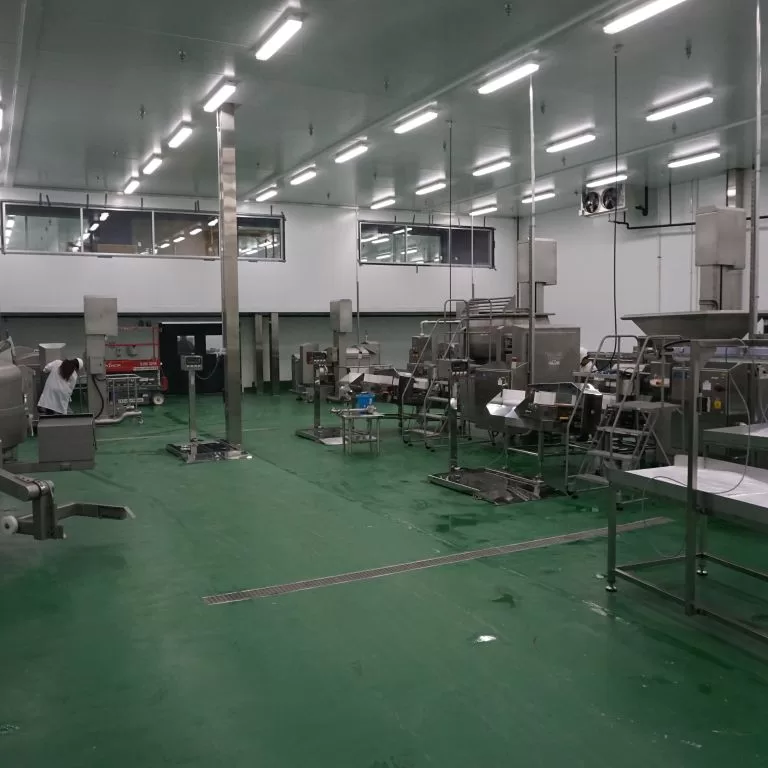
Durable and slip-resistant epoxy flooring for commercial kitchens installed at a New Jersey facility.

3. Quarry Tile

A traditional choice found in many older NJ establishments.

  • Pros: Naturally slip-resistant and heatproof.

  • Cons: Grout lines are porous and can harbor bacteria if not professionally maintained and sealed.
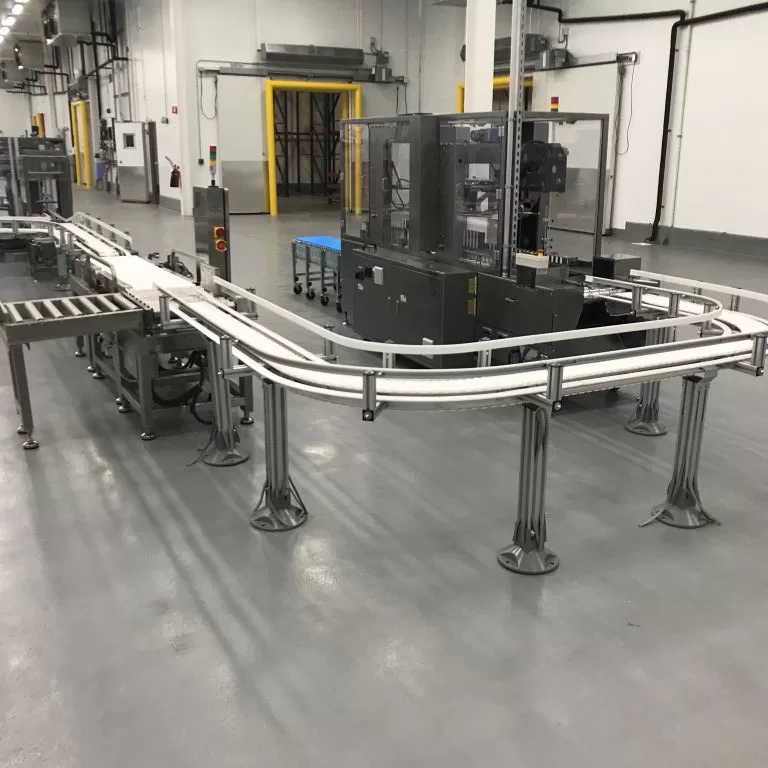
Professional installation of commercial kitchen flooring NJ

NJ Health Department Requirements for Commercial Kitchen Flooring

Investing in a high-performance system from a local New Jersey contractor offers significant ROI through:

  • Reduced Liability: Slip-resistant textures can reduce accidents by up to 40%, lowering workers’ compensation and liability insurance risks.

  • Seamless Hygiene: Resin-based floors eliminate the cracks and grout lines that cause health inspection failures.

  • Durability: Unlike residential solutions, commercial-grade systems are designed to withstand the weight of heavy ovens and the constant movement of rolling carts.

Finding a Commercial Kitchen FlooringContractor in NJ

When searching for a commercial kitchen flooring contractor in New Jersey that is USDA compliant—whether you are operating in the industrial hubs of Carlstadt, the high-traffic urban centers of Jersey City, or the growing commercial districts of Camden—the distinction between a general flooring installer and a specialist is vital for your long-term ROI.

Local Logistics in NJ Cities

Carlstadt & Bergen County: This area is a hub for food distribution and cold storage. Installers here must be familiar with rapid-cure systems (like MMA or Polyaspartic) that allow facilities to return to service in hours rather than days.

Jersey City & Hoboken: Space is at a premium and many kitchens are in multi-use buildings. You need a team experienced in low-VOC, low-odor installations that won’t disrupt neighboring businesses or tenants.

Camden & South Jersey: With the rise of large-scale food processing and institutional kitchens, look for contractors who have the equipment—like 800-pound planetary grinders—to handle high-square-footage projects efficiently and correctly.

Epoxy Flooring in Commercial Kitchens

FAQs About Commercial Kitchen Flooring in NJ

What are the specific NJ Health Department requirements for kitchen floors?

In New Jersey, kitchen floors must be non-porous, smooth, and easily cleanable. According to N.J. Admin. Code § 8:24-6.2, the floor must also include a coved base—an integral curve where the floor meets the wall—to prevent grease and bacteria from accumulating in 90-degree corners.

Installation time depends on the system used. While traditional epoxy may take 2-3 days to fully cure, specialized rapid-cure systems (like MMA or polyaspartic) can be ready for foot traffic in as little as 4-6 hours. This is ideal for 24-hour diners or high-volume restaurants in urban centers like Jersey City or Hoboken that cannot afford long shutdowns.

While quarry tile is traditional, epoxy and urethane cement are generally superior because they are seamless. Quarry tile has porous grout lines that can harbor bacteria, odors, and mold. Seamless resinous flooring eliminates these failure points, making it much easier to pass health inspections.

Yes, provided the substrate is structurally sound. Specialists use 800-pound planetary grinders to remove old coatings or prepare the concrete surface profile (CSP). If tile is present, it is often better to remove it to ensure a direct mechanical bond to the concrete slab, preventing future delamination or moisture issues.

NJ kitchens often use high-temperature power washers or have “walk-in” blast freezers. Standard floors can crack when the temperature changes rapidly (thermal shock). Urethane cement is engineered to expand and contract at the same rate as the concrete underneath, preventing cracks that lead to expensive repairs and potential health code violations.