...

Engineering Non Slip Commercial Kitchen Flooring for Safety

In high-volume food service environments, the non slip commercial kitchen flooring you choose is the foundation of your facility’s safety. Between grease, boiling water, and high-speed foot traffic, a standard floor isn’t enough—you need an engineered system that stands up to thermal shock and constant moisture.

Why Urethane Cement is the Industry Standard

Many facility managers ask about the cost of commercial kitchen flooring, but the real value lies in durability. We specialize in urethane cement because it offers:

  • Thermal Shock Resistance: Withstands power washing and high-heat spills.

  • Seamless Integration: Eliminates grout lines where bacteria and grease hide.

  • USDA/FDA Compliance: Meets strict hygiene standards for food processing.

Non Slip Flooring Commercial Kitchens
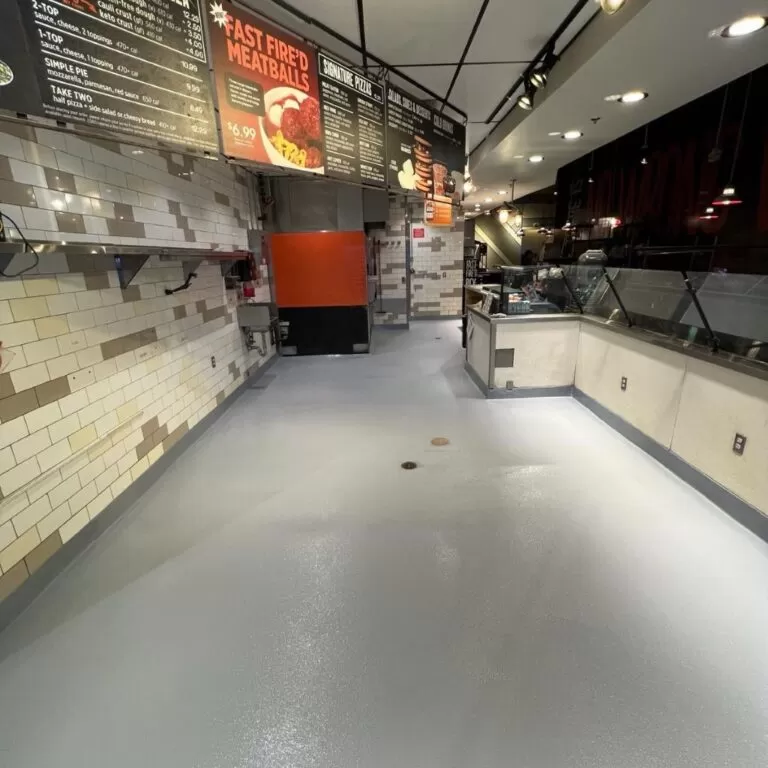
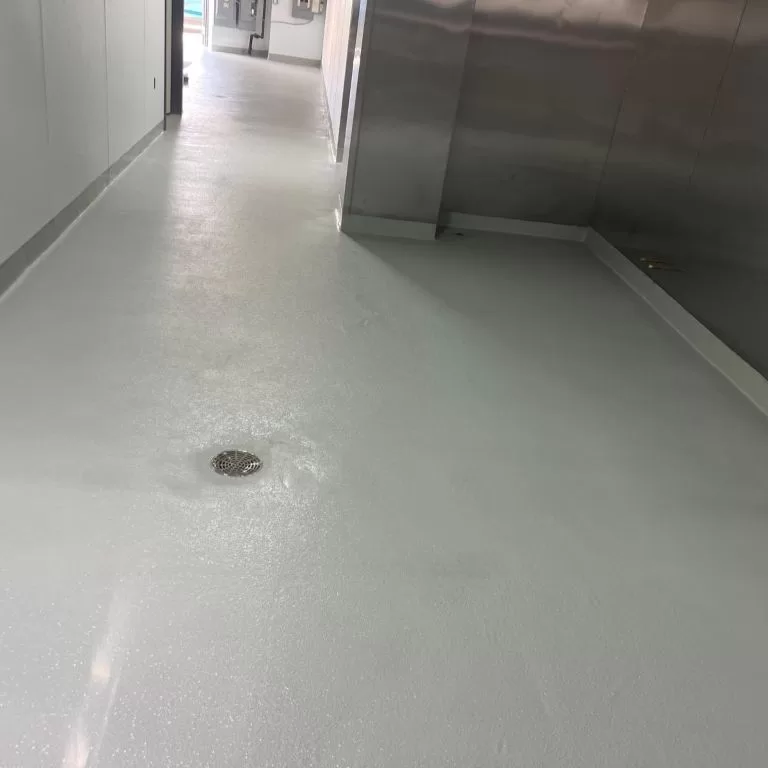
Installing high-traction non slip commercial kitchen flooring for safety and USDA compliance in a food processing facility.

Urethane Cement vs. Standard Epoxy

While many contractors offer “kitchen epoxy,” we exclusively recommend Urethane Cement for commercial hot-line environments.

  • Thermal Shock Resistance: Standard epoxy can delaminate when exposed to 200°F wash-downs. Urethane cement expands and contracts at a rate similar to concrete.

  • Moisture Vapor Tolerance: We utilize high-solids primers that mitigate moisture coming up through the slab, a common issue in older New Jersey industrial buildings.

  • Rapid Return-to-Service: We understand that downtime costs money. Our systems can often be installed over a weekend to ensure your kitchen is operational by Monday morning.

Customizing the Slip-Resistance Profile

Not every area of a kitchen requires the same grit. We customize the Coefficient of Friction (COF) based on the specific zone:

  1. Prep Stations: Fine texture for ease of cleaning.

  2. Dish Pit & Fryer Lines: Aggressive aluminum oxide broadcast for maximum traction against oil and water.

  3. Walk-in Coolers: Specialized low-temperature resins that cure in cold environments without losing slip resistance.

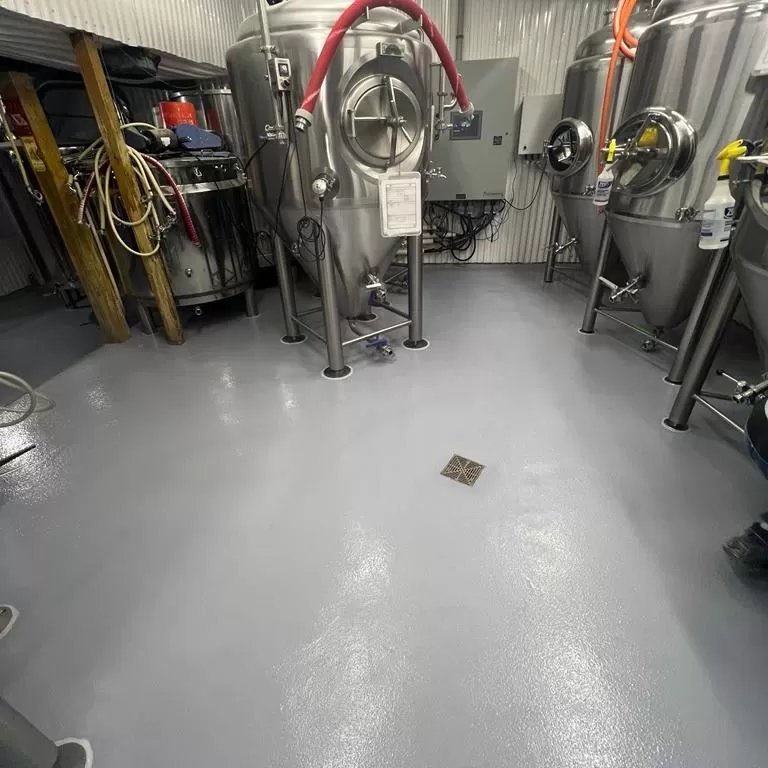
Restored industrial concrete floor after resurfacing by High Performance Systems.

FAQs About Non Slip Flooring For Commercial Kitchens

Why is a specific "non-slip" rating vital for commercial kitchens?

In a commercial kitchen, floor traction is a legal and operational necessity. High Performance Systems provides flooring that meets or exceeds OSHA and ADA traction requirements. This is achieved by embedding specialized aggregates into the resin, ensuring that even when the floor is covered in water, grease, or food debris, employees maintain the “grip” necessary to prevent slip-and-fall accidents.

Yes. A major advantage of resinous flooring is its customizable texture. Contractors can install a more aggressive, coarse texture in high-risk “hot zones” (near fryers and grills) where grease buildup is common, while using a finer, more comfortable texture in prep areas or dry storage to make cleaning easier while still maintaining safety.

A common concern is that textured floors trap dirt. However, professional non-slip systems are designed with “cleanability” in mind. By using high-quality topcoats that seal the anti-slip aggregate, the floor remains non-porous. This allows grease to be lifted easily with a deck brush or power washer without the dirt getting permanently lodged in the texture.

Safety isn’t just about texture; it’s about the floor staying intact. In kitchens where floors are hosed down with boiling water, High Performance Systems recommends urethane concrete. This material is specifically designed for thermal shock resistance, meaning it won’t crack or peel—which would create a secondary trip hazard—when exposed to extreme temperature swings.

While many contractors use simple sand, HPS often utilizes colored quartz or aluminum oxide. These materials are incredibly hard and do not “round off” or wear down easily under heavy foot traffic. This ensures that the floor retains its non-slip profile for years, rather than becoming smooth and dangerous after just a few months of heavy use.