...

Thermal Shock Resistant Flooring: Crucial for Food Production

Protect Your Facility from Delamination with USDA-Compliant Urethane Concrete.

Standard epoxy floors fail when exposed to rapid temperature shifts. At High Performance Systems, we specialize in thermal shock resistant flooring that expands and contracts at a rate similar to concrete, ensuring a permanent bond even during high-heat washdowns or in deep-freeze environments.

Why Thermal Shock Resistance is Non-Negotiable

In food production and industrial processing, floor failure isn’t just an eyesore—it’s a safety and compliance disaster. When boiling water hits a cold floor, the resulting “thermal shock” causes standard coatings to crack and peel.

  • Expansion Matching: Our urethane cement systems are formulated to mirror the thermal expansion coefficient of concrete, preventing the “buckling” effect that ruins thinner coatings.

  • Hygienic Integrity: By preventing cracks and delamination, our commercial kitchen flooring eliminates the pockets where bacteria like Listeria thrive.

  • USDA & SQF Compliance: Our seamless finishes are designed to meet the highest regulatory standards for food safety and sanitation.

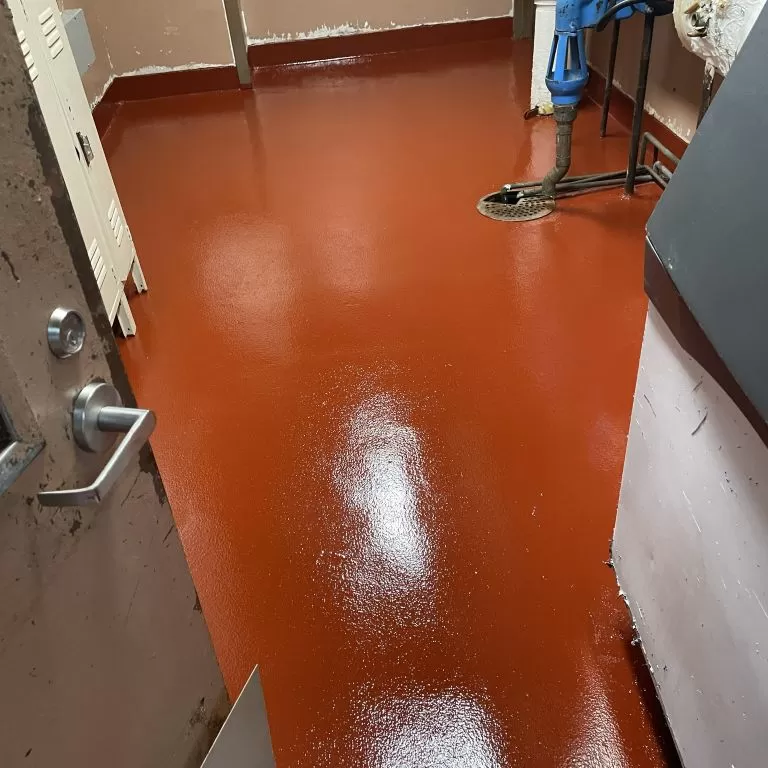
Heavy-duty thermal shock resistant flooring by High Performance Systems, featuring a USDA-compliant antimicrobial finish.
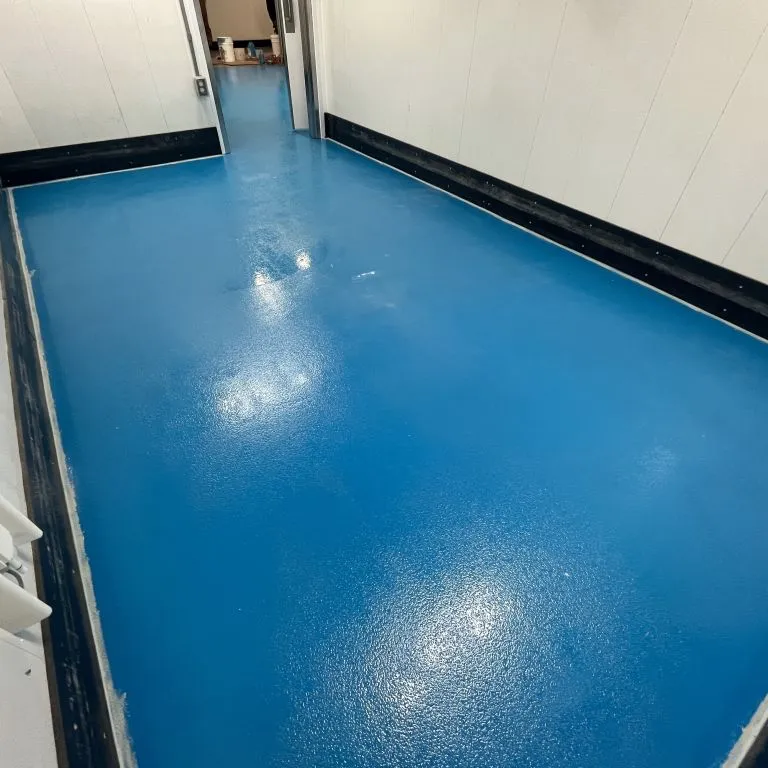
Finished installation of a seamless urethane cement floor system, providing thermal shock resistance in a food production area.

The Science of the Bond: Industrial Prep

Why Our Installations Outlast the Competition

A floor is only as good as its mechanical bond. As certified flooring contractors since 1988, we utilize 800-pound planetary grinders to achieve a heavy-duty Concrete Surface Profile (CSP). This allows our thermal shock systems to “anchor” into the substrate, creating a monolithic surface that withstands forklift traffic and chemical exposure.

Engineered for Rapid Return-to-Service

We understand that downtime equals lost revenue. Most of our thermal shock resistant flooring systems allow for a 24-hour return-to-service.

  • Fast Curing: Our specialized resins reach full compressive strength quickly, allowing your facility to resume production without missing a shift.

  • Off-Hour Installation: We offer weekend and holiday scheduling throughout NJ and VA to accommodate your production cycle.

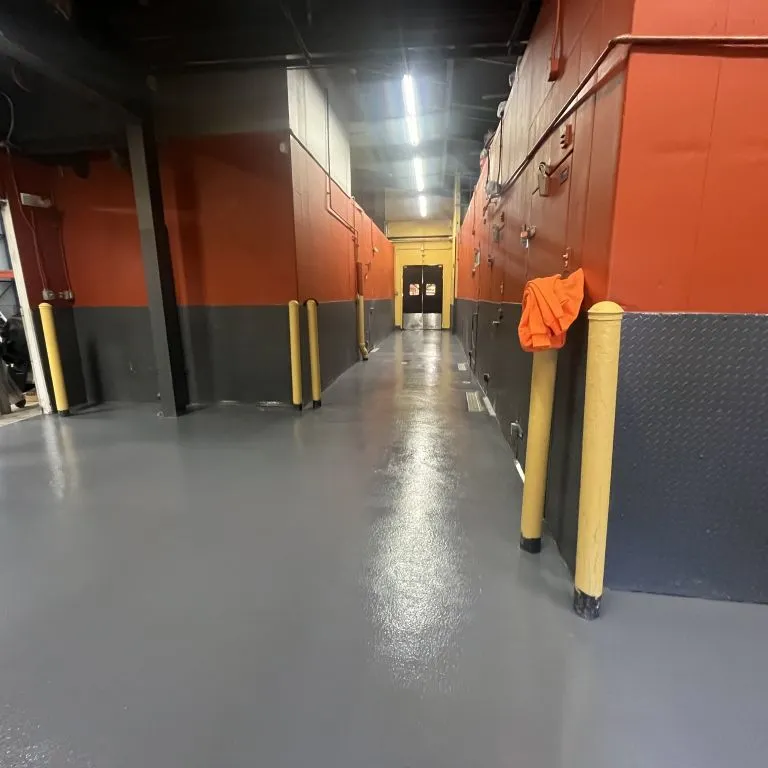
Industrial-grade thermal shock resistant flooring by High Performance Systems, featuring a durable, chemical-resistant finish.
Slip-resistant thermal shock resistant flooring installed by High Performance Systems, featuring a seamless, chemical-resistant industrial coating.

Conclusion: Future-Proof Your Facility

Reliable Protection for Food Production Areas

Don’t let a floor failure shut down your line. With over 40 years of experience in the industrial marketplace, High Performance Systems provides the technical expertise and high-performance materials needed to keep your facility safe and compliant.

Request a Technical Evaluation Today

FAQs About Thermal Shock Resistant Flooring

What is "thermal shock" in the context of industrial flooring?

Thermal shock occurs when a floor experiences a sudden, extreme change in temperature—such as a 150°F+ temperature swing in a matter of seconds. This typically happens during high-pressure steam cleaning, hot water washdowns in cold rooms, or when boiling liquids are spilled. Without specific resistance, standard floors will crack or delaminate due to the rapid expansion and contraction.

Standard epoxy is a rigid material that does not expand or contract at the same rate as the concrete beneath it. Urethane concrete (also called cementitious urethane) is engineered to have a coefficient of thermal expansion similar to that of the concrete slab. This allows the flooring system and the concrete to move together, maintaining a “tenacious bond” even under extreme thermal stress.

High-performance thermal shock systems are designed to remain stable in extreme environments, often handling constant temperatures from -40°F up to 220°F, and even intermittent exposure to temperatures as high as 250°F to 300°F. This makes them the industry standard for walk-in freezers, bakeries, and heavy-duty food processing plants.

The durability of the system is often tied to its thickness. While a thin coating might fail, a 1/4″ to 3/8″ urethane mortar provides a robust thermal barrier. Thicker systems can absorb more thermal energy and better protect the bond line between the resin and the concrete substrate, ensuring the floor doesn’t “pop” or bubble after a hot washdown.

This flooring is essential for facilities that prioritize hygiene and face extreme processing conditions. Key industries include:

  • Food & Beverage: Dairies, breweries, and meat processing.

  • Hospitality: Commercial kitchens with high-heat ovens and dishwashers.

  • Pharmaceutical: Facilities using steam sterilization or cage wash areas.

Your Next Move: Audit for Risk

Walk your production area today, not for a general inspection, but with a single focus: temperature extremes.

Trace the path from the cook tank to the cooling rack.

Look at the floor where the steam cleaner is used.

Examine the area in front of the blast chiller or freezer.

Those tiny cracks and hollow sounds aren’t minor flaws. They are thermal shock in action. The crack is the symptom; material incompatibility is the disease.

A true performance floor must be an active, reliable part of your production line, handling thermal stress as seamlessly as your HVAC. The best floor is one you forget because it simply works.

For three decades, High Performance Systems has engineered floors that withstand these exact forces. We diagnose the physics of failure to prevent it. The right floor exists. It starts with asking the right questions.