Estimate the Lifespan of Resin Flooring: Key Factors
Your resin flooring system looked perfect on day one. A flawless, seamless surface. But now, maybe a year in, you see a chip near the loading dock. Or a dull spot where forklifts constantly turn. You’re left wondering: Is this normal wear? Or did we get a bad install? How long should this floor really last?
It’s a question we hear all the time. The answer is never a single number. It’s a story. A story written by daily traffic, chemical spills, and the choices made long before the first layer was poured.
If you’re a facility or operations manager, knowing this story helps you plan your budget and avoid nasty surprises. Let’s break down the real factors that determine whether your floor lasts five years or twenty-five.
The Foundation: It All Starts With the Prep Work
You would not build a house on sand. A resin floor is no different. The concrete slab underneath is its foundation.
Poor concrete preparation is the number one reason good floors fail early. It is that simple.
Here is what needs to happen before a drop of resin is mixed:
Moisture Testing: Is there too much water vapor coming up from the slab? This will cause bubbles and delamination.
Surface Profiling: They need to grind or scarify the concrete. This creates a rough surface for the resin to mechanically grip. A smooth, shiny slab is a recipe for failure.
Crack Repair: Existing cracks must be properly addressed. If the slab is moving, the floor on top of it will crack too.
A great epoxy floor installer will spend more time on prep than on the actual coating. If a bid seems too low, ask them to detail their prep process. That is usually where corners are cut.
The Daily Grind: Traffic Tells the Tale
What rolls across your floor every day? This is the biggest variable in the lifespan equation.
Light Foot Traffic (Office Areas): With a simple epoxy coat, you can easily get 5-10 years.
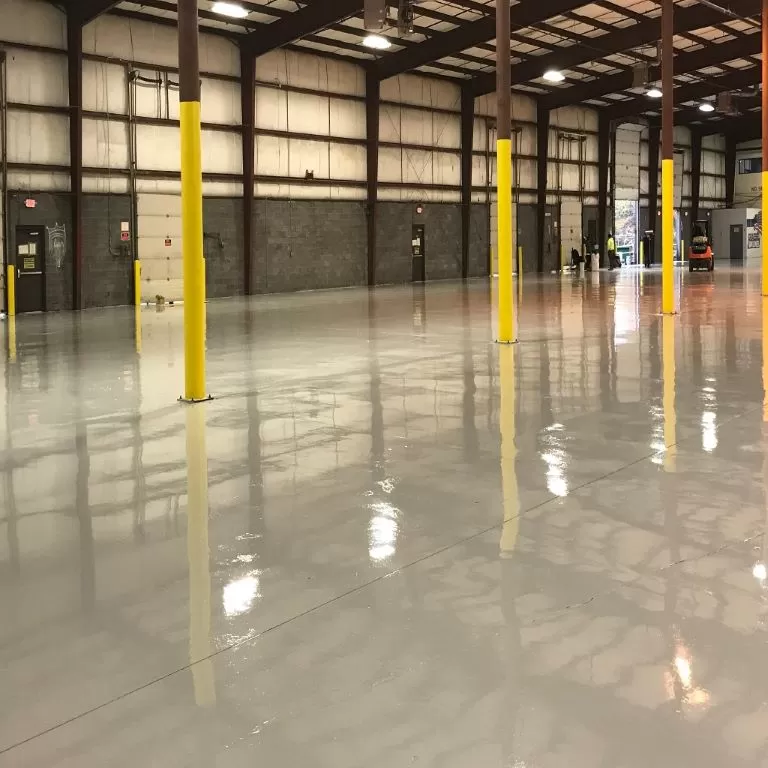
Heavy Rolling Loads (Warehouses, Distribution Centers): Think forklifts, pallet jacks, and heavy carts. You are dealing with intense impact and shear forces. A standard epoxy will chip and wear quickly. You need a much more robust system, like a high-build epoxy or polyurethane mortar. With the right resin flooring system, 10-20 years is achievable even under this abuse.
Steel vs. Polyurethane Wheels: This is a tiny detail with a huge impact. Hard steel wheels exert immense pressure on a tiny contact point. They will grind down a floor much faster than soft polyurethane wheels. It is like the difference between a stiletto heel and a sneaker on a vinyl tile.
The Chemical Cocktail: What Spills Matter?
Not all spills are created equal. A little water is fine. But other things will eat away at your floor over time.
We group chemicals into two categories:
Acids and Solvents: Such items as battery acid, some cleaning agents, and solvents. These are the most belligerent. They are able to harden and weaken the resin, causing irreversible stains and a weakened surface.
Oils and Greases: Common in automotive or kitchen settings. While less aggressive, they can seep into any tiny imperfection and cause slick spots.
The key is to match the floor to the spill. A methyl methacrylate (MMA) resin might be the choice for a facility that needs to wash down with harsh sanitizers daily. For a commercial kitchen, it is all about grease resistance and easy clean-up.
The Installation X-Factor: Experience Matters
You can buy the most expensive, high-performance resin on the market. But if resin flooring is installed incorrectly, it will fail.
This is where the contractor’s expertise is everything. An experienced installer knows:
How to read the room conditions. Temperature and humidity during application are critical.
The precise mixing ratios. Getting this wrong can mean the product never fully cures.
The correct application thickness. Too thin, and it wears through. Too thick, and it can generate excess heat and crack.
This is not a DIY job. It is a professional craft. The difference shows up in the seams, the edges, and the overall consistency of the finish.
A Real-World Example
We worked with a pharmaceutical warehouse in New Jersey. They had a new epoxy floor that started wearing through in the main aisles after just 18 months. The problem? The previous installer used a thin, decorative epoxy designed for a showroom. It looked great, but it was never meant to handle daily forklift traffic. We removed it and installed a 1/4-inch-thick polyurethane mortar system. That was eight years ago. They just had us back for a minor refresh, but the floor itself is still structurally sound. The right resin flooring system for the right job.
So, What's Your Floor's True Lifespan?
Think of it like this. A well-prepared slab with a resin system matched to your specific traffic and chemical loads, installed by a true professional, should give you a solid 15+ years of service. Maybe much more. For lighter duty, 5-10 years is a good benchmark.
But you will know it is time for a recoating or replacement when you see:
Worn-down paths in high-traffic areas.
Staining that will not come clean.
Cracking that follows the cracks in the slab below.
Areas where the coating has worn through, exposing the concrete.
The goal is not to make a floor last forever. The goal is to get the maximum possible service life from your investment without disruptive emergency repairs.
The Best Way to Know? Get a Professional Assessment
At High Performance Systems, we have been helping facility managers in NJ, NY, and PA decode their flooring needs since 1988. We do not just sell resin flooring systems. We provide solutions based on real-world experience.
The easiest way to get a true estimate for your facility is to have an expert take a look. We offer no-obligation, on-site assessments where we’ll evaluate your specific traffic patterns, chemical exposure, and slab condition. From there, we can give you a realistic lifespan for your current floor and a transparent quote for a solution that fits your budget and timeline.
FAQs
How long does a resin floor typically last?
The lifespan of a resin floor generally ranges from 10 to 20 years, but this is heavily dependent on the environment. In high-traffic industrial settings with heavy machinery, the lifespan may be shorter without a thicker, reinforced system, whereas a well-maintained commercial floor can easily exceed two decades.
What are the primary factors that decrease a floor's lifespan?
The “lifespan killers” for resin flooring include:
Abrasive Traffic: Constant dragging of pallets or studded tires.
Chemical Attacks: Exposure to acids or solvents that weren’t specified in the original design.
Thermal Shock: Frequent high-pressure steam cleaning on a system not rated for extreme temperature swings.
Poor Substrate Prep: If the underlying concrete wasn’t properly profiled, the resin will delaminate long before the material itself wears out.
Does the thickness of the resin affect its longevity?
Absolutely. A thin-mil “coating” (like a paint) may only last 2–5 years in a busy facility. Conversely, a 1/4-inch slurry or broadcast system provides a much deeper wear layer. High Performance Systems emphasizes that choosing the correct thickness for your specific “load” (foot traffic vs. forklift traffic) is the most critical factor in long-term ROI.
How does maintenance impact the durability of the surface?
Resin floors are “low maintenance,” but not “no maintenance.” Allowing dirt and industrial grit to sit on the surface acts like sandpaper under forklift tires, grinding down the topcoat. Regular cleaning with non-abrasive, pH-neutral cleaners preserves the slip-resistance and the integrity of the resin matrix.
Can a resin floor be "refreshed" without a full replacement?
Yes. If the structural bond to the concrete is still healthy but the surface looks dull or scratched, many systems allow for a “sand and reseal.” This involves lightly abrading the existing topcoat and applying a fresh performance layer, effectively resetting the floor’s aesthetic and chemical resistance at a fraction of the cost of a full install.