...

Cost-Effective Concrete Resurfacing Contractor

Restoring your facility’s safety, integrity, and appearance doesn’t require the massive expense, demolition, and downtime of a full slab replacement. For industrial warehouses, manufacturing plants, and commercial facilities across New Jersey, professional concrete resurfacing delivers a high-performance, seamless cementitious overlay that withstands heavy daily abuse.

Why Facility Managers Choose Concrete Resurfacing

Maximum Durability: Restores structural integrity, locking out moisture, oils, and chemical spills.

Minimal Downtime: Binds directly over existing concrete, allowing facilities to return to full operation in a fraction of the time.

Heavy Traffic Resilience: Engineered to handle relentless forklift turning traffic, steel-wheeled carts, and heavy rolling loads without delaminating.

Cost Efficiency: Achieves the performance and clean look of a brand-new floor at a fraction of the cost of demolition.

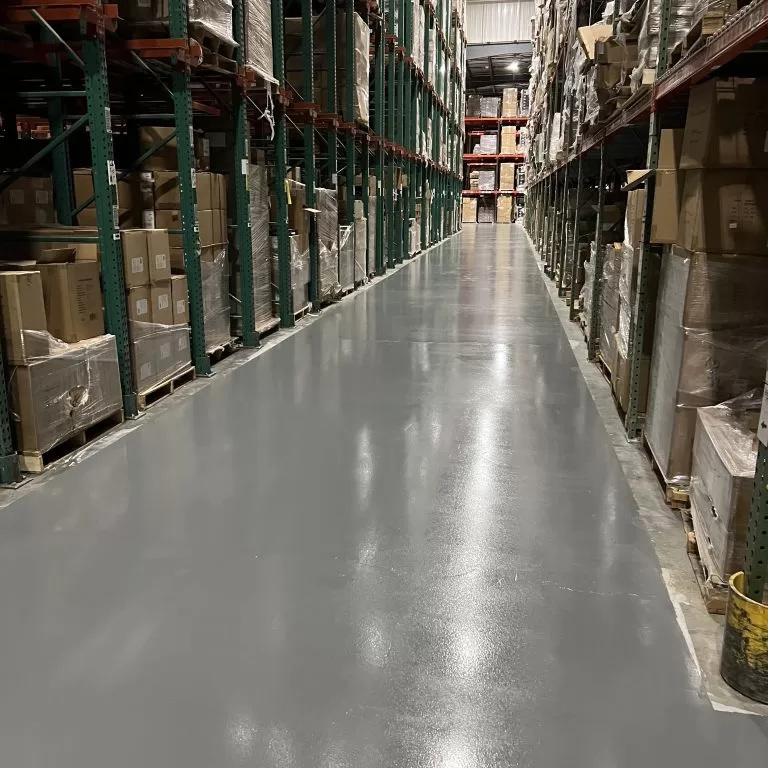
Heavy-duty industrial warehouse epoxy flooring with a high-gloss finish, designed to withstand heavy forklift traffic
Epoxy Concrete Resurfacing Contractor

Our Rigorous Preparation & Installation Standards

A lasting resurfaced floor depends entirely on proper substrate preparation. Our crews utilize heavy-duty 800-pound Sase planetary grinders paired with industrial HEPA vacuum dust-containment systems to thoroughly strip contaminants, open concrete pores, and establish an optimal anchor profile. Once prepped, we repair cracks and divots using high-strength epoxy or polymer mortars before applying your custom-formulated overlay and protective topcoat.

NO residential please — specialized industrial and commercial solutions only.

How a Professional Concrete Resurfacing Contractor Prepares Your Substrate

Heavy-Duty Mechanical Profiling: We utilize 800-pound Sase planetary grinders paired with industrial HEPA vacuum dust-containment systems to thoroughly strip surface contaminants, open concrete pores, and establish an optimal anchor profile (ICRI CSP standards) for maximum bonding.

Deep Contaminant & Grime Removal: Eliminating embedded oils, greases, chemical residues, and loose matter that compromise structural adhesion.

Structural Crack & Joint Repair: Pitted concrete, divots, and structural cracks are routed and filled using high-strength epoxy or polymer mortars, ensuring a uniform, load-bearing plane.

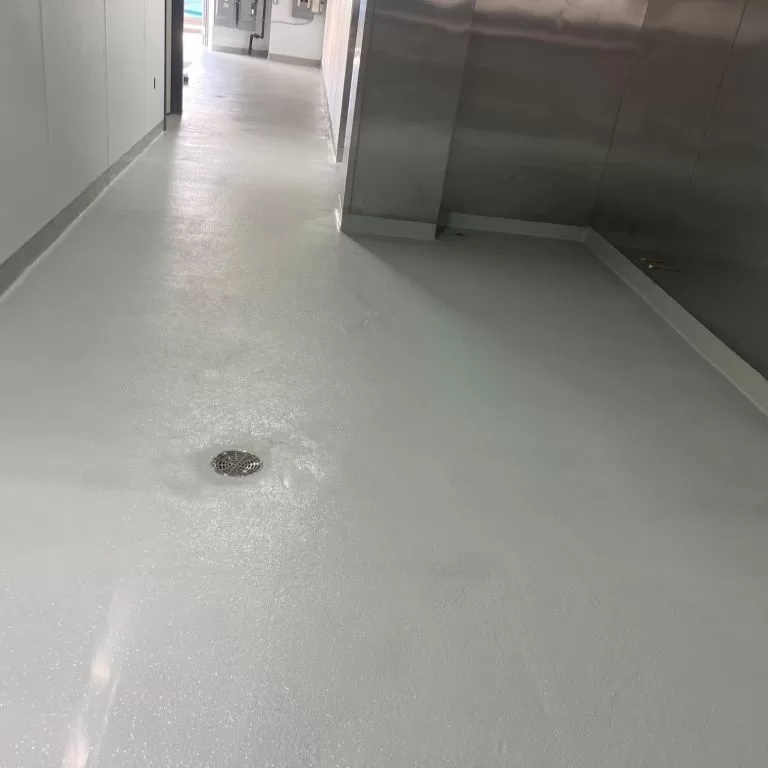
Restored industrial concrete floor after resurfacing by High Performance Systems.

FAQ About Concrete Resurfacing Contractor

What is concrete resurfacing, and how does it save money?

Concrete resurfacing is the process of applying a high-performance coating over an existing slab rather than tearing it out and pouring new concrete. As a cost-effective concrete resurfacing contractor, the goal is to renew the substrate’s durability and appearance without the massive labor and disposal costs associated with full demolition.

Yes. Professional contractors use specialized fillers and high-build resurfacing materials to bridge cracks and level pitted areas. By addressing these structural imperfections before applying the final topcoat, the contractor can restore a smooth, uniform surface to a floor that previously appeared beyond repair.

When performed by an experienced concrete resurfacing contractor, these systems are engineered as long-term solutions. Depending on the environment and the specific resin used (such as epoxy or urethane), a resurfaced floor can last for decades, resisting heavy machinery impact and chemical exposure.

Absolutely. In fact, it is often the preferred choice. Resurfacing allows warehouse managers to upgrade their floors to handle heavy forklift traffic and improve light reflectivity—which can lower energy costs—without the weeks of downtime required for a full concrete cure.

The primary difference lies in surface preparation. A professional concrete resurfacing contractor uses industrial diamond grinding or shot-blasting to open the concrete’s pores. This ensures a mechanical bond that DIY kits often lack, preventing the coating from peeling or flaking under industrial stress.