...
durable commercial kitchen flooring

The Role of Aggregate in Durability for Commercial Kitchens

You just finished a brutal Saturday night service. The air is thick with grease and steam. Your line cooks are mopping up, sluicing water, oil, and food debris towards the floor drains. In that moment, your floor isn’t just a surface. It’s your first line of defense against a slip and fall accident that could cost you an employee, a lawsuit, or worse.

If that thought makes you nervous, you are not alone.

Most kitchen owners know they need an epoxy floor. But few understand the real secret weapon. It is not just the resin itself. It is the tiny, gritty material broadcast into it. This is the magic that creates slip resistance and unbelievable durability. Get this part wrong, and your new floor could be a shiny, dangerous liability.

So, let’s break down what aggregate broadcast really is. And why it is the most important decision you will make for your kitchen’s safety and your own peace of mind.

NO RESIDENTIAL PLEASE
durable commercial kitchen flooring

What is Aggregate Broadcast? A Simple Analogy

Think of it like this. You are building a driveway out of solid ice. It is smooth and easy to clean. But it is also incredibly dangerous to walk on. Now, imagine pressing sand and tiny pebbles into that ice before it sets. Suddenly, you have grip. You have texture. You have safety.

That is exactly what aggregate broadcast does for an epoxy or resin floor.

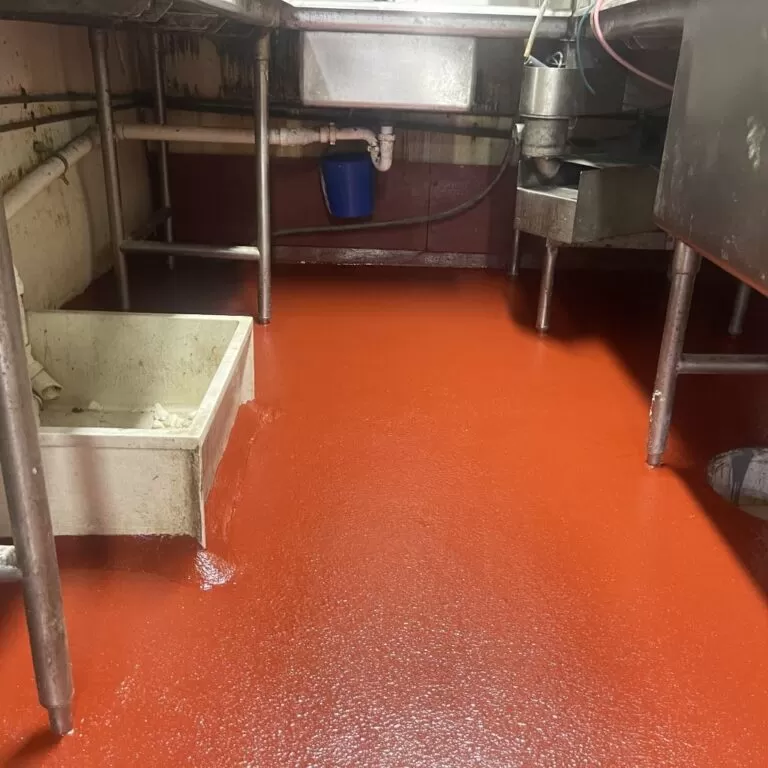
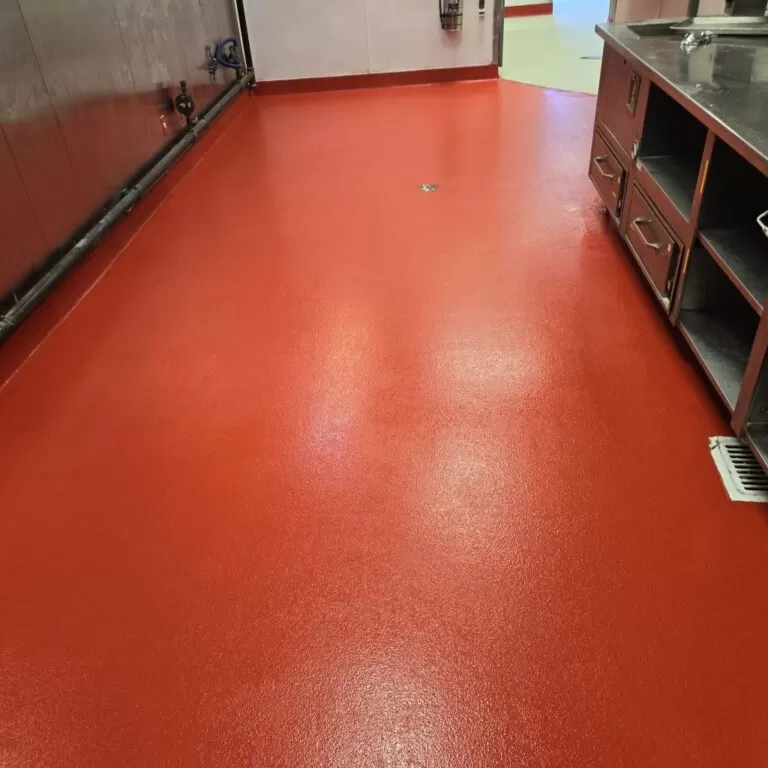
The liquid resin is the binding agent. It creates the seamless, waterproof shell. The aggregate? Those are the hard, gritty particles we scatter evenly across the wet surface. They become permanently embedded. The result is a floor that is both smooth for traffic and textured for traction. It is the best of both worlds.

The Gritty Details: How Broadcast Creates Slip-Resistance

This is not just about being “rough.” It is a science. The right aggregate creates something called a “profile.”

A high profile has more texture. It is like very fine sandpaper. A low profile is smoother but still offers grip.

In a commercial kitchen, you need a high profile. Here is why.

It disrupts the film of water and grease. A perfectly smooth surface lets liquids form a continuous, slippery layer. Aggregate particles break that layer apart. They create millions of tiny points of contact for shoe soles.

It works when wet. This is the critical part. The grip is built into the floor’s structure. It does not wear away after a few months of scrubbing.

We have seen kitchens where the floor was just a thin coat of epoxy. It looked great on day one. By week six, the constant traffic and chemical cleaning had polished it smooth. It became a skating rink. That is a problem a proper broadcast system completely solves.

commercial kitchen flooring

Beyond Safety: The Durability Factor You Never Considered

Slip resistance is the headline. But the durability this adds is the hidden bonus.

Think about what your floor endures every single day.

Heavy carts and dollies

Dropped pots and pans

Constant foot traffic from staff in hard-soled shoes

A plain resin coat will scratch, scuff, and wear down over time. It is just a thin layer of plastic taking all the abuse.

Now, imagine that same floor, but its surface is made of incredibly hard, mineral-rich particles. The wear and tear is no longer on the resin. It is on the aggregate. And these particles are designed to take a beating. They act like armor plating for your floor.

This armor does two things.

It massively extends the life of your floor. You are not looking at a costly replacement in just a few years.

It keeps the floor looking professional and clean. A scratched, worn floor holds bacteria and looks terrible. A protected floor maintains its integrity and is easier to sanitize.


Choosing the Right Grit for Your Kitchen

Not all aggregates are the same. You have options. The choice depends on your specific needs.

Silica Sand: A cost-effective, classic choice. Provides excellent slip resistance. Perfect for most general kitchen applications.

Aluminum Oxide: This is the premium option. It is significantly harder and more durable than sand. It is the go-to for very high-traffic areas or places where extreme chemical resistance is needed.

How do you choose? A good flooring contractor will not just sell you a product. They will ask about your operation.

How many covers do you do a night? What is your cleaning protocol? Do your staff use specific types of non-slip shoes?

The answers determine the perfect system for you. At High Performance Systems, we have samples you can actually feel with your hands and walk on. Seeing and feeling the difference is the best way to understand it.

commercial kitchen epoxy flooring costs

The Bottom Line: An Investment, not a Cost

Skipping a proper aggregate broadcast might save you a few dollars per square foot upfront. But it is a classic case of being penny-wise and pound-foolish.

You are sacrificing the two most important things a kitchen floor provides.

The safety of your team

The long-term value of your investment.

A floor that needs to be replaced in five years is not a good deal. A floor that prevents just one major accident has already paid for itself many times over.

Your kitchen is the engine of your business. Every component needs to be chosen for performance and reliability. Your floor is no different. Do not just settle for a shiny coat. Demand a system built to last and built to protect.

Ready to see and feel the difference a professionally broadcast floor can make? Let’s talk. High Performance Systems can provide a complimentary, no-obligation assessment of your kitchen space. We will bring the samples, answer your questions, and give you a clear path to a safer, more durable floor.

Name
800-928-7220