...

Restaurant Epoxy Flooring: Durable & USDA-Compliant Solutions

Engineered to Withstand High-Traffic Service and Extreme Thermal Shock.

Standard floors often fail under the pressure of a busy kitchen. At High Performance Systems, we provide industrial-grade restaurant epoxy flooring designed for maximum durability, slip resistance, and 24-hour return-to-service.

Engineered For The Heat Of Service

  • Thermal Shock Resistance: Our systems handle extreme temperature swings—from high-heat washdowns to walk-in freezers—without cracking.

  • USDA & FDA Compliance: Our seamless, non-porous surfaces meet strict health and safety regulations, making inspections effortless compared to traditional tile.

  • Customizable Safety: We incorporate specialized non-slip additives to ensure secure footing in grease-prone conditions.

  • Independent Selection: As an independent flooring contractor, we choose the best resins for your specific budget and timeline, not just one brand.

Industrial-grade restaurant epoxy flooring by High Performance Systems, featuring a USDA-compliant antimicrobial finish.
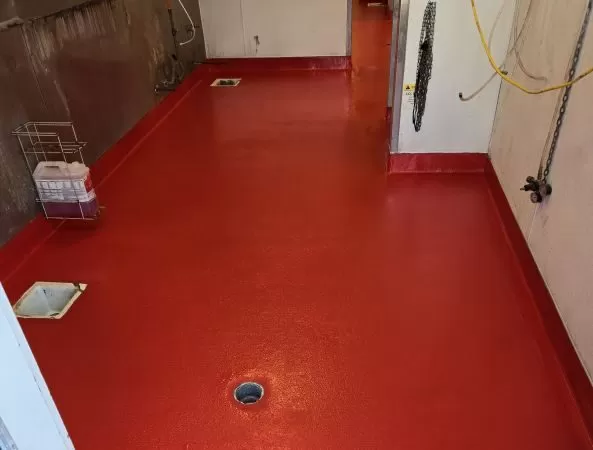
Reddish-brown restaurant epoxy flooring with integrated radius coving and seamless drain integration for superior sanitation.

Beyond Aesthetics: The Technical Edge of Restaurant Epoxy Flooring

Restaurant epoxy flooring is the gold standard for modern food service. While it offers a wide range of styles—from solid colors to chip flooring—the real value lies in its low-maintenance profile.

Unlike tile, which harbors bacteria in grout lines, our epoxy flooring systems are monolithic. They never require waxing and can be cleaned with a simple sweep and mop, saving you thousands in long-term labor costs.

Professional Preparation & Installation of Restaurant Epoxy Flooring

Why Preparation is the Key to a Permanent Bond

Most floor failures occur because of poor preparation. We utilize 800-pound planetary grinders and shotblasting to create a deep, aggressive Concrete Surface Profile (CSP). This mechanical bond ensures your floor doesn’t just sit on top of the concrete—it becomes part of it.

Your Trusted Partner for Restaurant Flooring Since 1988

With over 40 years of experience, High Performance Systems understands the unique demands of the Tri-state and Virginia restaurant markets. We deliver high-performance solutions that keep your kitchen compliant and your staff safe.

Get Your Free Technical Consultation Today

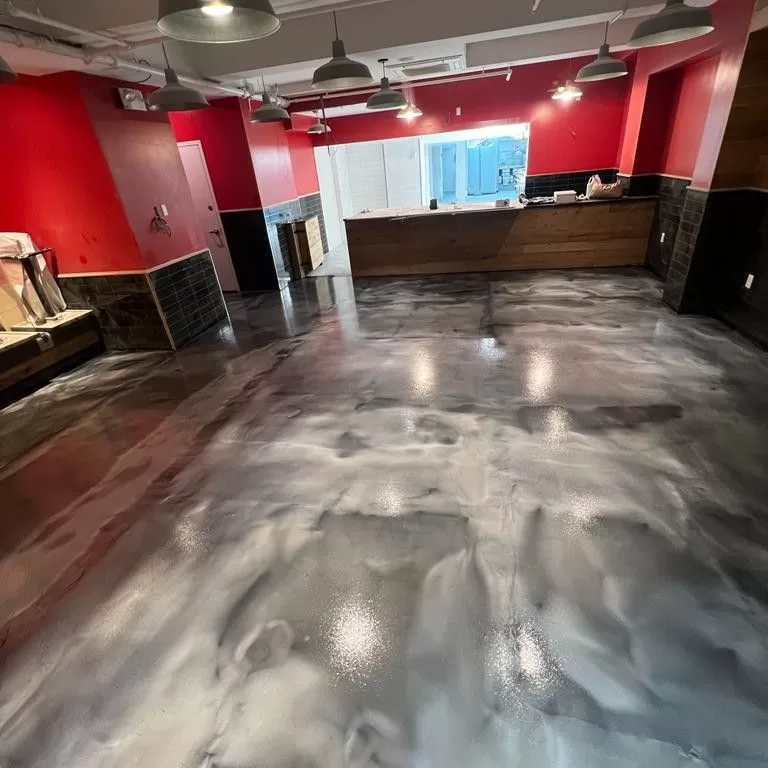
Decorative metallic restaurant epoxy flooring with a high-gloss seamless finish in a modern dining area.

FAQs About Restaurant Epoxy Flooring

Is epoxy flooring compliant with health and safety regulations?

Yes. High-performance epoxy and urethane systems are designed to meet USDA, FDA, and HACCP standards. Because the surface is seamless and non-porous, it eliminates grout lines where bacteria, mold, and pathogens typically grow, making it much easier to pass health inspections compared to traditional tile.

Absolutely. One of HPS’s specialties is Urethane Concrete, which is engineered to handle extreme temperature fluctuations. This prevents the floor from cracking or “delaminating” when you move from cold storage temperatures to high-heat cleaning or when hot grease is spilled on a cool floor.

Safety is customized by zone. HPS uses adjustable aggregate levels (like quartz or aluminum oxide) to create a high-traction finish. For example, fryer areas can be engineered with a more aggressive texture to compensate for grease, while “front of house” dining areas can have a subtler, more aesthetic slip-resistant finish.

When professionally installed, these systems typically last 10 to 20 years. They are rated for high compressive strength (often exceeding 10,000 psi), meaning they can withstand heavy kitchen equipment, constant foot traffic, and impact from dropped pots or pans without chipping like ceramic tile.

No. HPS offers “minimal disruption” scheduling. This includes:

  • Off-hour installations (overnight or weekends).

  • Sectional installs to keep parts of the kitchen operational.

  • Rapid-cure options that allow for foot traffic in as little as 24–48 hours, significantly reducing potential revenue loss.