Top Factors That Influence Commercial Kitchen Epoxy Flooring Cost
You’re finalizing the budget for your restaurant or commissary kitchen renovation. The equipment quotes are in. The cabinetry is priced. Then you get to the flooring estimate, and the numbers give you pause. Why does a seemingly simple floor system carry such a variable price tag? The fact is that the price is not random. It is a first-person account of the efforts and creative work that went into producing a floor that will not succumb to the inhumane conditions of a commercial kitchen.
Understanding these cost factors isn’t about finding the cheapest option. It’s about making a smart capital investment. Let’s break down the real variables that shape your quote, moving beyond square-foot guesses to the concrete, or rather, epoxy details.

The Foundation Itself: Your Existing Subfloor
This is the single biggest wildcard. An epoxy contractor giving you a firm price without seeing your subfloor is a red flag. We’ve walked into kitchens where the concrete slab appeared fine, but moisture meter readings were off the charts. That requires a complete moisture mitigation system before a single drop of epoxy is poured.
New, sound concrete: Minimal prep needed. Lower cost.
Old, damaged concrete: Requires extensive diamond grinding, crack repair, and leveling. Adds significant labor and material cost.
High moisture content: Demands specialized primers or even a full moisture vapor barrier membrane. A critical, non-negotiable expense.
You can’t put a performance coating over a problem and expect it to last. The investment in proper prep directly dictates the lifespan of your floor.
The Coating System: It's More Than Just "Epoxy"
The term “epoxy” is like saying “car.” A compact and a heavy-duty truck are both cars, but built for entirely different jobs. Your kitchen’s specific needs dictate the system.
Basic Epoxy: A thin mil coating. Fine for very low-traffic, dry areas. It will not hold up to a real kitchen.
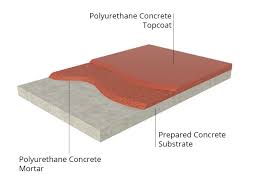
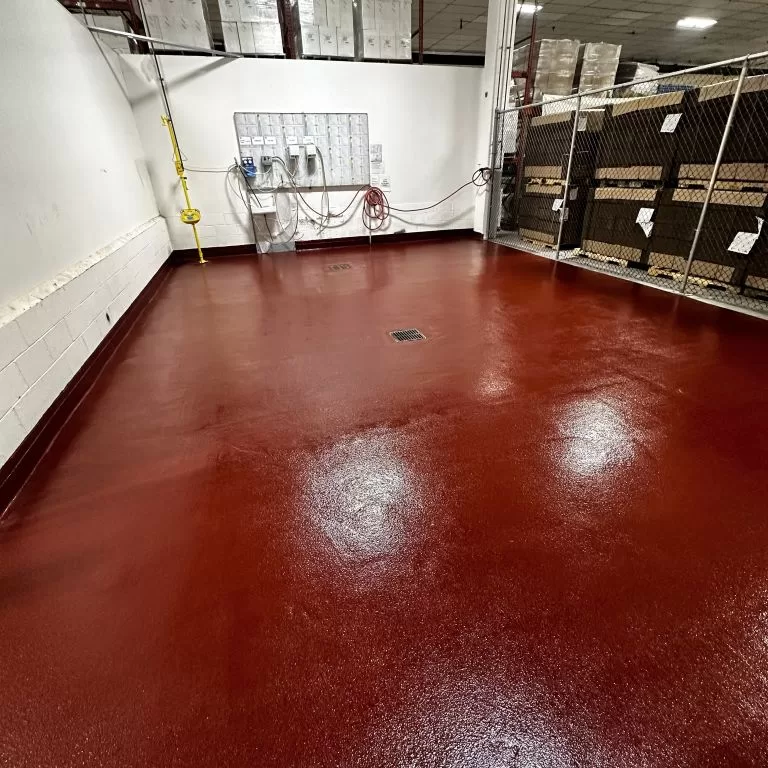
100% Solids Epoxy or Polyurethane Systems: These are the industrial-grade workhorses. They’re thicker, seamless, and can be sloped to drains. They resist thermal shock from hot fryer oil hitting the floor and chemical attacks from degreasers. This is where most legitimate commercial kitchen quotes start.
Additives & Aggregates: For safety, aluminum oxide or quartz sand can be broadcast into the coating for slip resistance, a must-have in kitchens. This adds material and installation steps.
Choosing a system is a balance of performance requirements and budget. The wrong choice leads to premature failure, which is the most expensive outcome of all.
The Intangible Factor: Labor & Expertise
Here’s a lesson from a job years ago that went sideways: we were subcontracted by a general contractor who awarded the flooring to the lowest bidder. That crew tried to shortcut the cure time between coats on a busy schedule. The result was a soft, sticky floor that reeked of amines and had to be fully removed at double the cost. Expertise isn’t a line item; it’s insurance.
Certified Installers: They know how to read conditions and adjust. This knowledge prevents catastrophic, costly failures.
Timeline & Access: Can the kitchen shut down completely for 4-7 days? Or does work need to happen in overnight shifts? Complex logistics increase labor costs.
Site Details: Working around a labyrinth of fixed equipment is slower and more precise than coating an empty shell. The number of drains, corners, and penetrations all adds time.

The Long-Term Math: Total Cost of Ownership
The cheapest installation can become the most expensive floor you’ll ever own. Consider a floor that stains easily from tomato sauce or beet juice. Now imagine the nightly labor cost of a porter scrubbing for an extra 30 minutes to remove those stains. Over a year, that labor far exceeds the incremental cost of a premium, stain-resistant coating.
A proper high-performance floor should be virtually maintenance-free, just routine cleaning. The ROI isn’t just in longevity, but in reduced daily labor and operational headaches.
Making Sense of Your Bids
When reviewing quotes, don’t just look at the bottom line. Scrutinize the scope:
What specific prep steps are listed (grinding, patching, moisture testing)?
What is the exact product name and mill thickness proposed?
What is the warranty, and what does it explicitly cover?
A detailed, thorough proposal might come in higher but reflects a contractor who understands the complexities. A one-line quote for “epoxy flooring” is a gamble.
Protecting Your Investment: The Final Step in Your Flooring Plan
The cost of commercial kitchen epoxy flooring is a direct function of subfloor condition, system performance, and installation expertise. It’s a capital investment that protects your operations, your safety record, and your sanity for a decade or more. The goal is to solve the problem permanently, not just cover it up for now.
For over three decades, the team at High Performance Systems has navigated these variables in New Jersey’s toughest kitchen environments. We build the cost of doing it right the first time into every estimate, because we know the staggering cost of getting it wrong.
High Performance Systems
436 Lincoln Blvd Middlesex, NJ 08846
Phone: 800-928-7220