...

The Guide to Industrial & Commercial Acid-Stained Concrete Flooring

Cost Effective Decorative Flooring

When it comes to high-traffic commercial interiors, architectural warehouses, and retail environments, acid stained concrete flooring offers the perfect balance of rugged durability and elevated aesthetics. Traditional topical coatings can wear down over time, but a deep, reactive concrete stain creates a permanent, chemically fused color infrastructure that transforms a standard structural slab into a stunning, wear-resistant surface.

NO RESIDENTIAL PLEASE

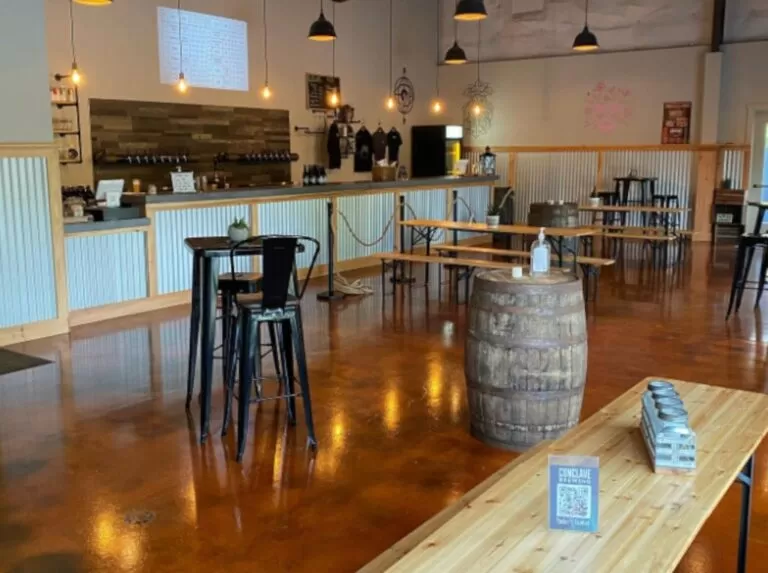
Commercial acid stained concrete flooring in a modern craft brewery taproom
Commercial acid stained concrete flooring with a high gloss protective sealer

Chemical Realities of Acid Stained Concrete Flooring

Unlike paints or standard epoxies that sit on top of the concrete slab as a film, reactive acid stains penetrate deep into the substrate.

The stain formulation consists of water, hydrochloric acid, and acid-soluble metallic salts. When applied to a properly prepared slab, the acid lightly etches the surface, allowing the metallic salts to react chemically with the calcium hydroxide (hydrated lime) inherent in the concrete.

This reaction permanently alters the concrete matrix, producing rich, variegated, and translucent color tones that mimic natural stone, marble, or weathered leather. Because it is a chemical reaction rather than a topical layer, acid-stained concrete flooring cannot chip, peel, or flake away under heavy foot traffic or rolling loads.

The Crucial Step: Substrate Preparation

The success of a decorative resinous or stained concrete installation is entirely dependent on the quality of the mechanical prep work. Because acid stains are translucent, they do not hide imperfections; instead, they highlight them.

  • Mechanical Grinding: Slabs must be mechanically ground using planetary diamond grinders to remove old adhesives, sealers, curing compounds, and contaminants.

  • Managing the CSP: For stained profiles, a fine Concrete Surface Profile (CSP 1 to CSP 2) is typically targeted. Grinding too aggressively with coarse metals can strip away the lime-rich top layer of the concrete, which is exactly what the acid needs to react with to create color.

  • Flushing and Neutralization: After the stain is applied and the chemical reaction is complete, the residual acid must be meticulously neutralized using a solution of water and ammonia or baking soda, followed by a thorough clean-water rinse. Failing to neutralize the slab will prevent the protective topcoat from adhering properly.

Commercial acid stained concrete flooring with a high gloss protective sealer

Key Benefits of Acid Stained Concrete Flooring for Commercial Facilities

  • Permanent Colorfastness: Because the color becomes an integral part of the concrete itself, it resists fading and wear far better than topical paints or thin stenciled overlays.

  • Low Maintenance: Once sealed with a high-performance polyurethane or epoxy wear-layer, the floor requires only basic sweeping and damp mopping, eliminating the need for constant stripping and waxing.

  • Unique Aesthetic Appeal: No two slabs react exactly the same way. The result is entirely bespoke, with an upscale, industrial-chic look that elevates retail spaces, restaurants, corporate offices, and showrooms.

Common Questions About Acid Stained Concrete Flooring

How does acid-stained concrete improve the look of an old floor?

Acid staining is excellent at making old, worn-down concrete substrates look new. It uses unique color variations that help hide previous imperfections and “sins” in the concrete while providing an elegant, “old world” aesthetic that mimics natural stone or marble.

To ensure the design lasts and remains scratch-resistant, the stained floor is encased in a high-solids epoxy and then finished with a top coat of aliphatic urethane. This combination protects the stain and maintains a consistent, high-quality sheen even in heavy-traffic areas.

No. Unlike topical paints or coatings, this system uses an acetone-based stain that is impregnated directly into the concrete slab. Because the color becomes part of the substrate itself, there is no concern for the color peeling or flaking away over time.

Acid-stained floors are very low maintenance and never require waxing. Because the surface is seamless and protected by durable topcoats, regular upkeep simply involves a standard broom sweep and mopping when necessary to keep the floor looking pristine.

No. High Performance Systems specializes exclusively in the industrial and commercial marketplace. Their systems are engineered for high-durability environments like retail spaces, restaurants, and commercial facilities rather than residential applications.