How to Retrofit a Warehouse Floor Resurfacing with Urethane Cement Without Major Disruption
Your warehouse can’t afford to stop. Every minute of downtime is a hit to the bottom line. Pallets stack up. Order delay. The pressure is on. So, the idea of ripping up and replacing your concrete floor? It sounds like a nightmare.
But what if you could get a super tough, new floor with minimal fuss? What if the process were more of a smooth shift change than a full shutdown?
Warehouse floor resurfacing with urethane cement may be the key. This guide will walk you through how to get a permanent floor solution without the major disruption. We will cover the planning, the process, and how to keep your business running.
Why Urethane Cement is the Go-To for Retrofits
First, let’s talk about the material itself. Urethane cement isn’t your average floor coating. It’s a hybrid. It combines the best parts of different technologies.
Think of it as the ultimate upgrade.
It is incredibly durable. It can take a beating from steel forklift wheels and heavy loads day in and day out. It is also highly chemical-resistant. Spills from oils, fuels, and solvents are just wiped up. No stains. No damage.
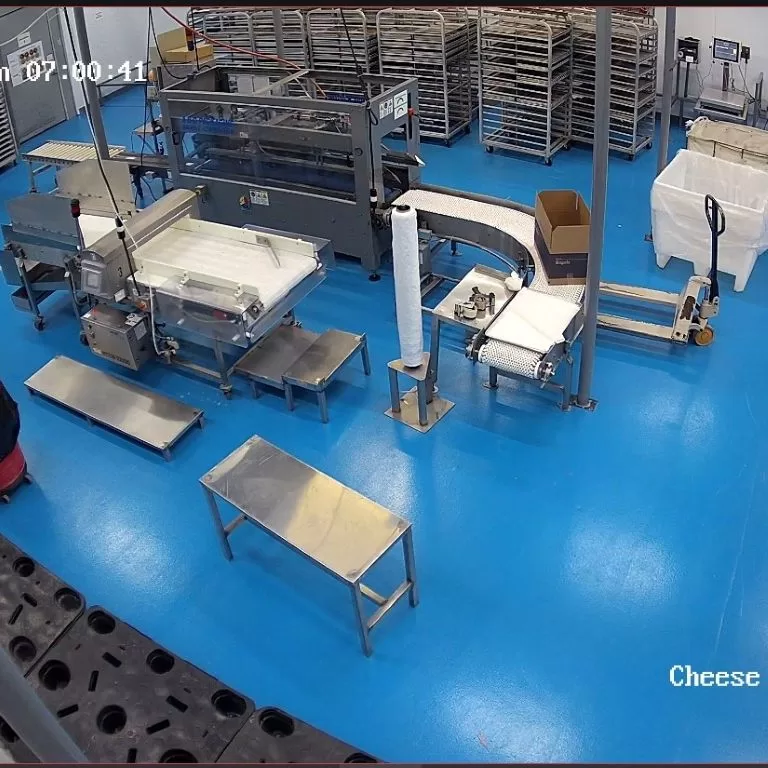
But the real hero for a retrofit is its physical strength. It handles thermal shock. That means hot tire picking from forklifts won’t soften it or make it peel. And it bonds exceptionally well to existing concrete. Even concrete that has seen better days.
This strength means we can often install it directly over your current slab. No demolition. No jackhammers. That is where you save massive time and avoid huge disruption.
The Phased Approach: A Plan for Minimal Downtime Using Warehouse Floor Resurfacing
Successful warehouse floor resurfacing is all about the plan. Rushing in causes problems.
A careful, phased approach keeps everything on track and your operation moving.
Phase 1: The Deep Dive Assessment
This is the most critical step. You have to know what you are working with. We always start with a thorough site evaluation.
We are looking at a few key things:
- Moisture Vapor Transmission: Is there moisture coming up from the slab below? This can ruin a floor. We test for it.
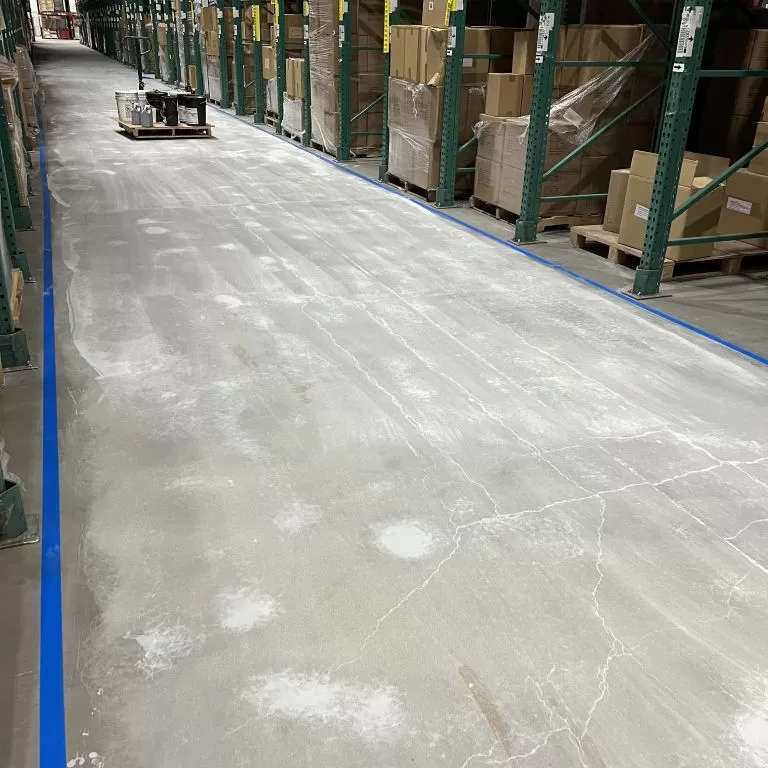
- Surface Contamination: Are there oils, grease, or old coatings that could prevent a good bond? We find them.
- Concrete Condition: Are there massive damages or dropping concrete? These need special attention.
This isn’t just a quick look. It is a diagnosis. It tells us exactly how to prepare the surface for a perfect installation.

Phase 2: Strategic Surface Prep
You cannot put a great floor over a poorly prepared one. It will fail. Preparation is everything.
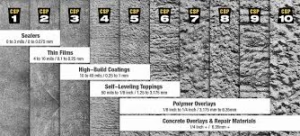
The goal here is to create a clean, sound, and porous surface for the urethane cement to grip onto. We typically use diamond grinding or scarifying. These machines open up the concrete surface.
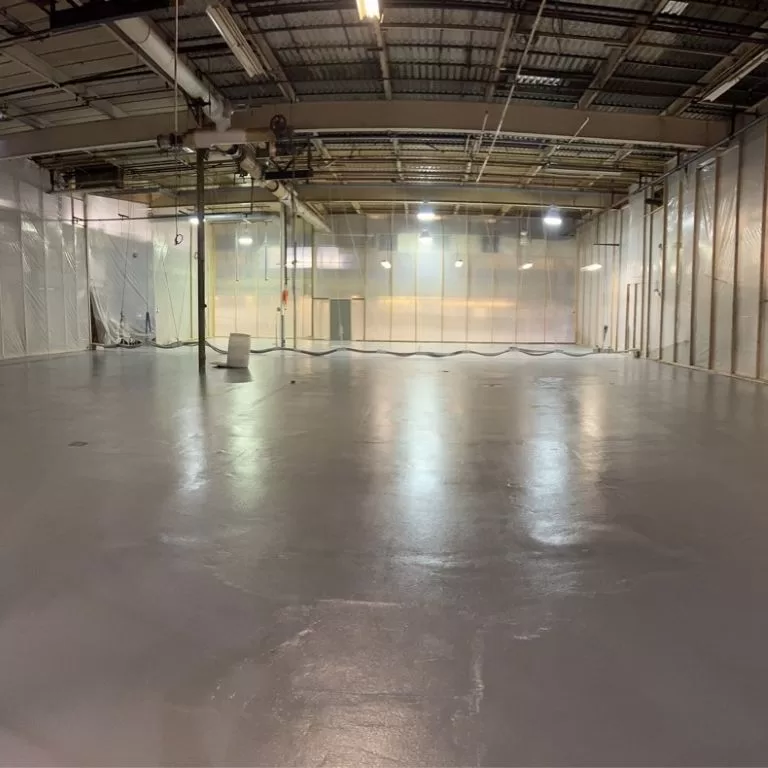
The beautiful part? This work is localized. It is noisy and dusty, we won’t lie. But we use industrial containment equipment. Dust collectors, plastic walls. We seal off the area we are working on. Your other operations can continue nearby with minimal impact.
Phase 3: The Installation Dance
This is where the magic happens. Urethane cement is installed in thin layers, usually a primer and a topcoat. It is a fluid material that self-levels. This means it finds its own flat plane, filling in minor imperfections.
The installation is fast. This is a huge advantage.
We can often coordinate work in sections. Maybe we can do half your warehouse on a Friday afternoon and Saturday. Then the other half the next weekend. We work with your schedule. The material cures quickly. So you can get light foot traffic back on it in just hours, and forklift traffic often within 24-48 hours.
This speed is what makes the “no major disruption” promise a reality.

Your Role in a Smooth Project
As the facility manager, you are part of the team. Your input is gold. The best way to help is with communication.
Tell us everything about your workflow. Where are the high-traffic aisles? When are your peak receiving hours? Is there a quiet period we can exploit?
The more we know, the better we can sequence the work. We can plan around your inventory cycles. We can avoid your busiest corridors until the very end. This collaboration is the secret sauce for a warehouse floor resurfacing project.
Real World Example: A Distribution Center in Edison, NJ
We worked with a large distribution center right here in New Jersey. They had a concrete floor that was crumbling. Dust was a constant problem. It was getting into their products and machinery.
A full replacement was quoted as a three-week shutdown. They could not afford that.
We proposed a urethane cement retrofit. We divided their 50,000 square foot space into four quadrants. We worked on one quadrant at a time over two weekends. We used temporary barriers and fans for dust control.
Their operations team rerouted forklifts. It required some extra planning on their part, for sure. But their shipping and receiving bays never closed. Business continued.
By the end of the project, they had a new, seamless, dust-free floor. And they never had to send a single truck away.
Key Takeaways for Your Project
Warehouse floor resurfacing does not have to mean shutting down.
Plan Meticulously: The pre-construction assessment is your best friend.
Choose the Right Material: Urethane cement offers the strength and fast cure times for this job.
Work in Phases: Sectional work is the key to maintaining operations.
Communicate Constantly: Your knowledge of your facility is irreplaceable.
You need a floor that can keep up with your business, not shut it down.
Thinking about a floor upgrade, but worried about the chaos? Let’s talk. At High Performance Systems, we have been solving these exact problems for decades. We can walk through your facility and provide a clear, realistic plan for your retrofit.
High Performance Systems
436 Lincoln Blvd Middlesex, NJ 08846
Phone: 800-928-7220