Can You Pour Epoxy Flooring Over Asbestos Tiles? Benefits, Risks, and Best Practices
You’re staring down at those old, brittle asbestos tiles in your industrial facility or basement. Maybe they’re chipped. Maybe they’re just ugly. The immediate thought is to cover them up, to seal them away under a sleek, modern epoxy floor. It seems like the perfect, cost-effective solution. But before you even think about mixing a single gallon of resin, there’s a non-negotiable first step.
This isn’t just about flooring. It’s about safety, legality, and the long-term performance of your investment. Pouring epoxy over asbestos tile is one of those topics where the internet is full of dangerously oversimplified advice. As a company that has been installing resinous floors since 1988, we’ve been asked this question hundreds of times. The answer is never a simple yes or no.
Here is what you absolutely need to understand, broken down without the jargon.
The One Rule You Cannot Break
First, let’s be blunt. You cannot and should not sand, grind, drill, or aggressively mechanically abate asbestos-containing materials. Ever. Asbestos fibers, when airborne, pose a serious health risk. This is the core of the entire issue.
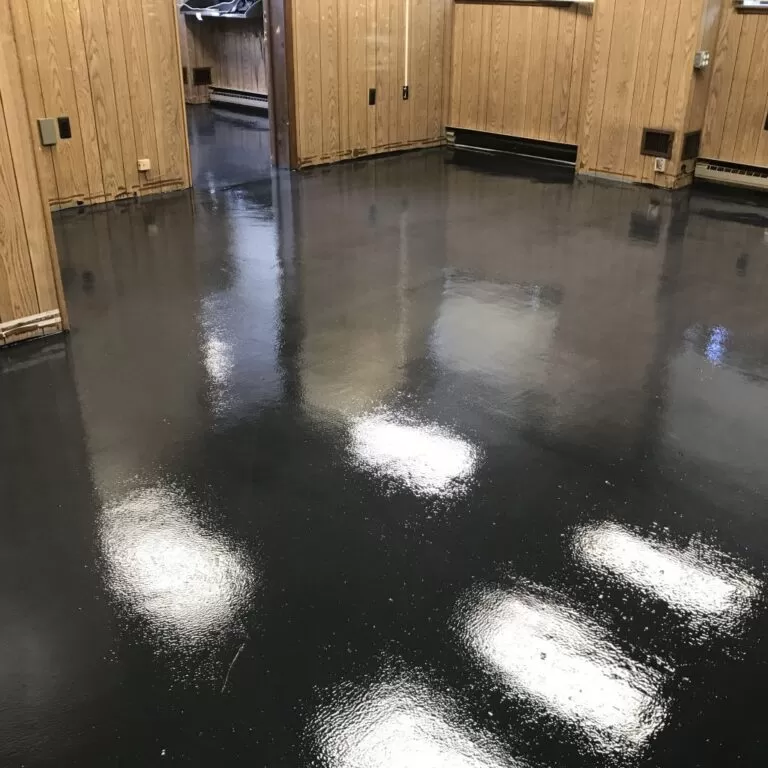
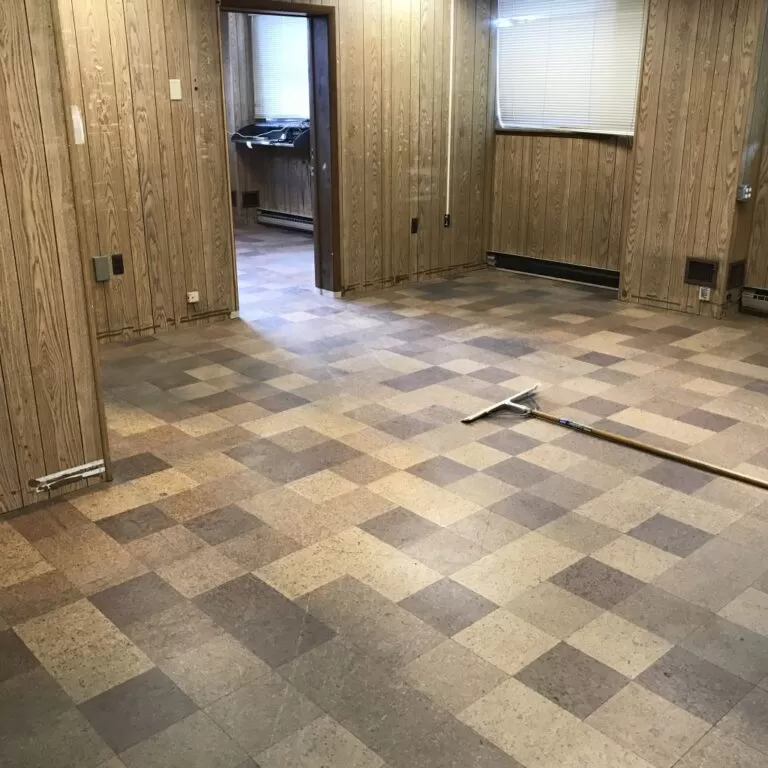
When we talk about asbestos floor tiles, we’re usually discussing vinyl asbestos tile (VAT) from the mid-20th century. If those tiles are intact, firmly adhered, and in good condition, they are often considered “non-friable.” This means the asbestos is locked within the matrix of the material and not easily made airborne. In this specific scenario, encapsulation, which is essentially what pouring an epoxy coating over it is, can be a recognized management option.
The keyword is “intact.” If the tiles are cracked, crumbling, or loose, all bets are off. The risk of fiber release during the surface preparation necessary for epoxy (even simple scarifying) becomes too high.
A Practical, Step-by-Step Evaluation
This isn’t a DIY assessment. You need a professional workflow. Here’s how a knowledgeable contractor approaches it.
Step 1: Positive Identification is Mandatory. You must assume tiles installed before 1980 contain asbestos. Guessing is irresponsible. A certified asbestos inspector must take samples for lab analysis. This serves as your legal and ethical foundation.
Step 2: Assess the Substrate Condition. If the test comes back positive, the condition is everything. A professional will examine:
Is the tile fully bonded to the subfloor? Any loose spots?
Are there cracks, curls, or signs of moisture damage?
What is the current finish? Is it waxed, sealed, or painted?
An epoxy coating is only as good as what’s underneath it. A failing tile will lead to a failing floor.
Step 3: Choose the Right Preparation Method. This is where expertise matters most. If encapsulation is deemed viable, preparation methods must not generate dust.
Wet methods and chemical stripping are sometimes used.
Mechanical grinding is typically off the table.
The goal is to degrease, clean, and lightly etch the surface to create a profile for the epoxy to bond to, without penetrating the tile itself.
Step 4: Select the Epoxy System. Not all epoxies are equal here. You need a high-solids, moisture-tolerant, and highly adhesive formulation. The epoxy should be able to provide a permanent and impermeable seal. This is the reason why we usually suggest an increased mil application that will produce a strong monolithic barrier.
Weighing the Real Benefits and Inherent Risks
Let’s be clear about what encapsulation offers and where the pitfalls lie.
The Potential Benefits:
Cost-Effective Management: It can avoid the tremendous expense of full asbestos abatement.
Minimal Disruption: When properly carried out, it produces much less mess and downtime than removal.
Creates a Functional Surface: You get a modern, seamless, chemical-resistant floor.
The Inescapable Risks & Downsides:
It’s a Permanent Commitment: The asbestos has not been removed. The renovations that will be done in the future will be specific and will incur extra expense.
Moisture Trapping: When there is a case of moisture vapor transmission in the subfloor, sealing the subfloor under the epoxy and tile will eventually fail, forcing the moisture on the edges or failure of the adhesive.
Bonding Challenges: Achieving a perfect, lasting bond over a potentially waxy or compromised old tile surface is technically demanding. Peeling is a real possibility if done incorrectly.
Legal & Disclosure Issues: This managed asbestos has to be recorded so that it can be used later in any property transactions.
The Final Verdict from the Field
Can you pour epoxy over asbestos tile? Technically, sometimes yes, but only after expert verification and under strict controls. It is a risk-management strategy, not a simple home improvement project.
The absolute best practice is to involve specialists from the very beginning. The process should look like this:
Hire a certified asbestos inspector.
Review the lab report and condition assessment with a qualified epoxy flooring contractor who has specific experience with asbestos encapsulation.
Together, make an informed decision: professional encapsulation or professional removal.
Trying to shortcut this process to save money upfront is a gamble with health, liability, and the longevity of your floor. A beautiful epoxy floor should be the final step in a sound, safe process, not a cover-up for unresolved problems.
For over three decades, High Performance Systems has navigated these complex substrate challenges in facilities across New Jersey and beyond. The right answer always starts with safety and honesty about what’s under your feet.
FAQ
How does asbestos tile floor epoxy resurfacing benefit New Jersey commercial buildings?
Asbestos tile floor epoxy resurfacing by High Performance Systems creates a durable, safe surface over old tiles, improving aesthetics and safety in New Jersey commercial buildings.
What epoxy coatings for asbestos tile floors does High Performance Systems recommend?
High Performance Systems recommends high-strength, chemical-resistant epoxy coatings designed specifically to encapsulate asbestos tile floors safely in New Jersey.
Can low-maintenance asbestos tile epoxy floors reduce cleaning costs for New Jersey facilities?
Yes, low-maintenance asbestos tile epoxy floors installed by High Performance Systems help New Jersey facilities lower cleaning and maintenance expenses.
What commercial asbestos tile epoxy coatings does High Performance Systems provide in New Jersey?
High Performance Systems offers commercial asbestos tile epoxy coatings in New Jersey that deliver high strength, chemical resistance, and a clean, sealed finish.
Where are asbestos tile epoxy encapsulation systems used by High Performance Systems in New Jersey?
Asbestos tile epoxy encapsulation systems from High Performance Systems are used in New Jersey commercial and industrial buildings to safely seal existing asbestos‑containing floor tiles.
High Performance Systems
436 Lincoln Blvd Middlesex, NJ 08846
Phone: 800-928-7220