...

High-Traffic Flooring: Choosing Epoxy, Resin, or Urethane Cement

High traffic flooring, whether for an industrial or commercial facility, the concrete floor is under constant assault. Continuous forklift traffic, heavy rolling pallets, impact from dropped tools, and harsh chemical washdowns will quickly degrade an unprotected concrete slab, causing cracking, dusting, and severe safety hazards. To protect your structural infrastructure and maintain seamless 24/7 operations, a surface needs more than just a standard coating—it requires a high-performance, engineered resinous flooring system. Whether your facility demands the high compressive strength of an industrial epoxy, the rapid return-to-service of advanced resins, or the thermal shock resistance of urethane cement, choosing the right material formulation and substrate preparation is critical to long-term durability.

Industrial Epoxy Flooring: The Workhorse of Heavy Logistics

Industrial epoxy flooring is a high traffic flooring system, a multi-coat system comprising polymer resins and hardeners that chemically bond to a properly prepared concrete substrate. It is widely used in large-scale warehouses, distribution hubs, and manufacturing facilities for its high compressive strength and exceptional wear resistance.

  • Best For: Warehouses, aerospace hangars, logistics hubs, and manufacturing aisles.

  • Key Advantage: Incredible tensile and compressive strength, making it highly resistant to the constant rolling loads of heavy forklifts and pallet jacks.

  • The HPS Difference: We don’t just “paint” floors. True industrial durability requires mechanical substrate preparation using 800-pound planetary diamond grinders to achieve the precise concrete surface profile (CSP) needed for a permanent, high-strength chemical bond.

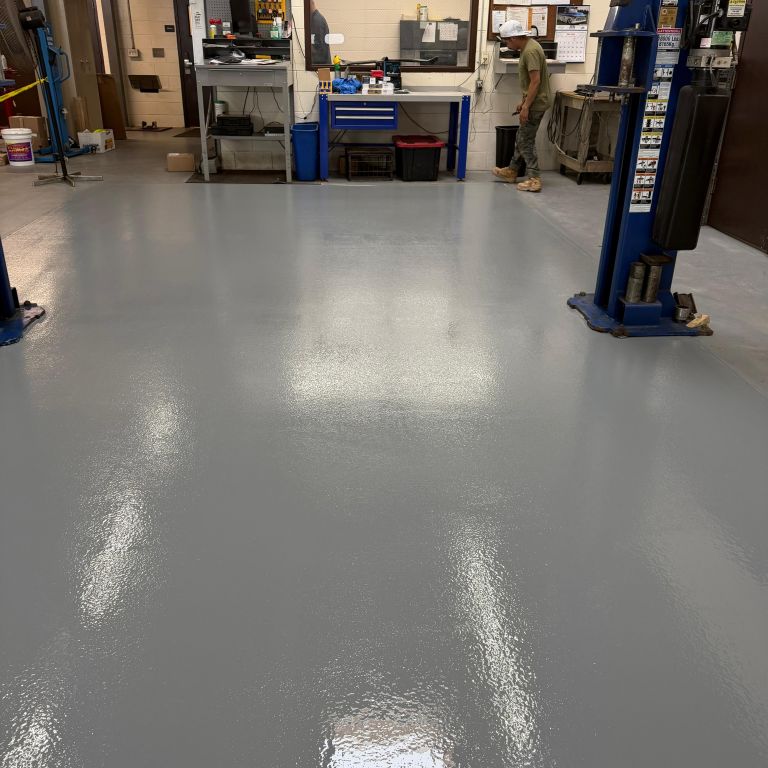
Rapid curing advanced resin floor system installed on diamond ground concrete substrate for 24 7 high traffic industrial use.
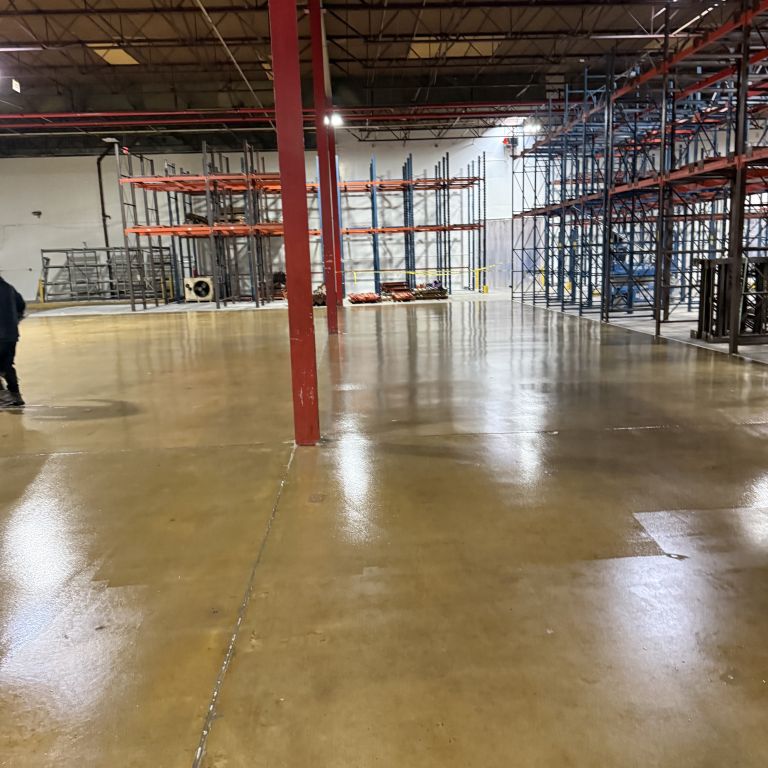
Industrial flooring renovation showing spalled commercial concrete substrate next to new high traffic resin flooring

Advanced Resin Flooring: Customizable High-Performance Systems For Heavy Traffic Flooring

“Resin flooring” encompasses advanced formulation variants—including polyaspartics, urethanes, and methyl methacrylate (MMA)—engineered for environments requiring ultra-fast curing times, UV stability, or specialized impact resistance.

  • Best For: 24/7 high traffic flooring operational facilities, chemical processing zones, and loading docks.

  • Key Advantage: Exceptional flexibility and rapid return-to-service capabilities. Certain resin systems can cure in as little as a few hours, minimizing costly operational downtime.

  • The HPS Difference: Our multi-coat resin systems are customized with aggregate broadcasts (like quartz or aluminum oxide) to deliver tailored slip-resistance, ensuring safety in fast-paced, heavy-traffic environments.

Urethane Cement: The Ultimate Armor for High Traffic Flooring

Urethane cement (also known as urethane concrete) combines cementitious aggregate technologies with high-grade polyurethane resins. This creates an incredibly dense, thick-film thermal barrier that anchors deep into the concrete. It is the gold standard for the most demanding industrial zones requiring high traffic flooring.

  • Best For: Commercial kitchens, food and beverage processing plants, heavy chemical environments, and washdown bays.

  • Key Advantage: Unmatched resistance to thermal shock. While epoxy can crack under extreme temperature swings (such as steam cleaning a cold room), urethane cement expands and contracts at the exact same rate as the underlying concrete.

  • Sanitary Compliance: It is entirely seamless, moisture-tolerant, and handles harsh chemical sanitizers, making it fully USDA and FDA compliant.

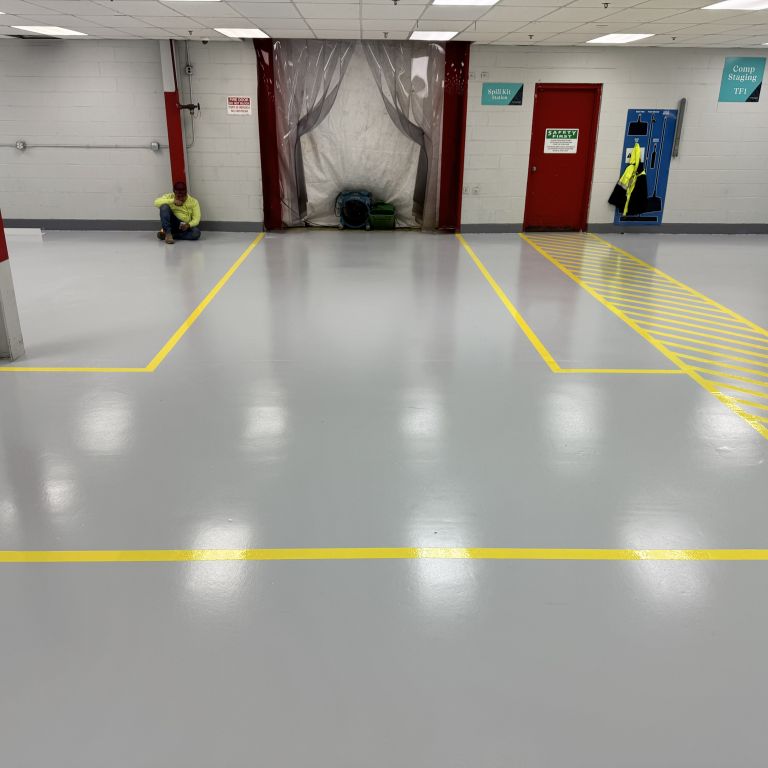
Heavy duty urethane cement flooring installed in a high traffic food processing facility to withstand forklift traffic
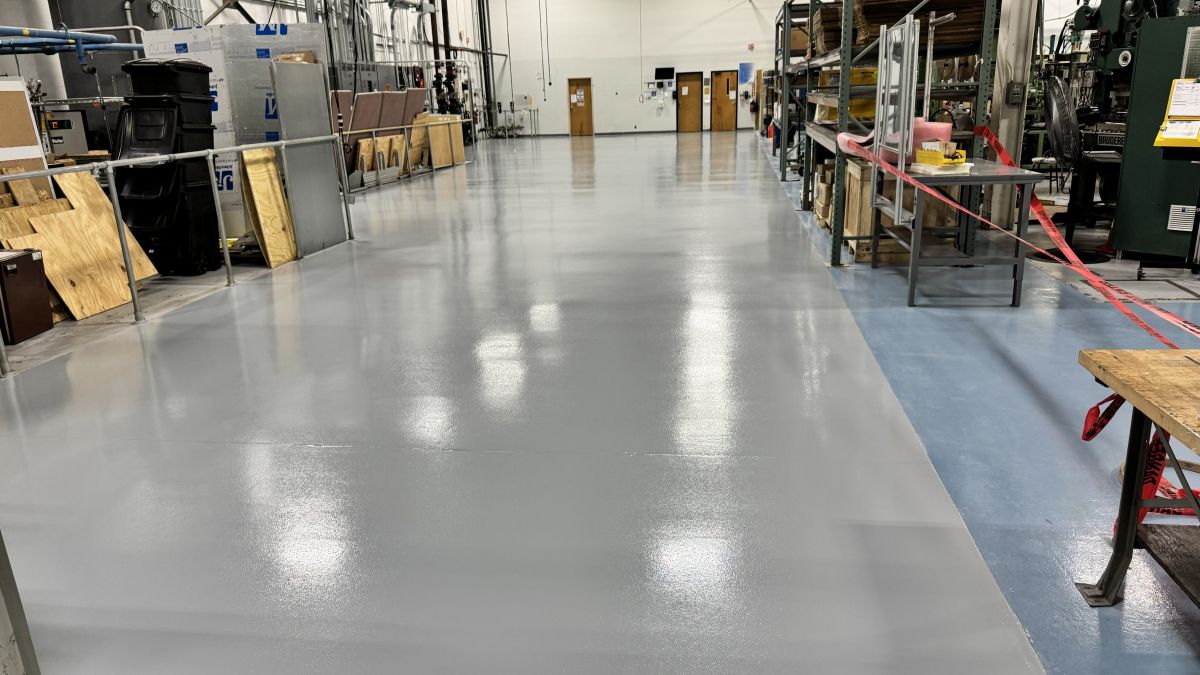
Heavy duty industrial epoxy flooring installed in a high traffic logistics warehouse with forklift traffic.

Technical Comparison: Choosing Your System

FeatureIndustrial EpoxyAdvanced ResinsUrethane Cement
Primary BenefitHigh compressive rolling load capacityRapid cure & UV stabilityThermal shock & chemical resistance
Typical EnvironmentDistribution & Logistics24/7 ManufacturingFood Processing & Chemical Plants
Moisture ToleranceModerate (Requires vapor barrier if high)ModerateExceptional (Handles high MVT)
Installation ProfileSmooth or textured multi-coatHigh-gloss or decorative quartzHeavy-duty slurry (1/8″ to 1/4″+)

FAQs

Which flooring system is best for facilities with heavy forklift traffic?

For intense rolling loads and constant forklift traffic, industrial epoxy systems and urethane cement are the top choices. Epoxy offers incredible compressive strength on properly prepared concrete, preventing surface wear and cracking under heavy pallets. If your forklifts operate in areas with extreme temperature drops, moisture, or chemical spills, urethane cement is recommended because it flexes with the substrate and resists impact without delaminating.

The primary difference lies in thermal and moisture resistance. While industrial epoxy is incredibly tough against abrasion and rolling loads, it can crack under thermal shock (sudden temperature drops or steam cleaning). Urethane cement handles extreme temperature swings ($180^\circ\text{C}$ or more) and severe moisture vapor transmission (MVT), making it the gold standard for food processing and chemical plants, whereas epoxy is ideal for dry manufacturing and distribution warehouses.

Downtime varies significantly depending on the system selected. A standard multi-coat industrial epoxy typically requires 24 to 48 hours to cure for heavy traffic. However, if your commercial facility operates 24/7, we can engineer advanced resin flooring systems (such as polyaspartics or MMA) that cure completely in just a few hours, allowing your operations to resume with minimal disruption.

A high-traffic resinous floor is only as strong as its bond to the concrete substrate. Acid washing or simple cleaning is not enough for industrial environments. We use 800-pound planetary diamond grinders or shotblasters to open the concrete pores and achieve a specific Concrete Surface Profile (CSP). This mechanical profile allows the epoxy or urethane cement to fuse deeply into the slab, preventing peeling or bubbling under heavy loads.

No. High Performance Systems specializes exclusively in industrial and commercial flooring infrastructure. Our heavy-duty equipment, specialized chemical formulations, and installation protocols are specifically engineered for large-scale facilities, manufacturing plants, warehouses, and commercial spaces. We do not offer residential services.