...

Industrial-Grade Restaurant Kitchen Flooring in Edgewater & Weehawken, NJ

The Gold Standard for Gold Coast Kitchens

Operating a commercial kitchen in the high-traffic areas of Edgewater and Weehawken means your floors never get a day off. Between constant foot traffic, extreme temperature shifts from ovens to walk-ins, and the inevitable spills of hot grease and oils, standard tile simply won’t cut it.

At High Performance Systems, we specialize exclusively in industrial and commercial flooring. We don’t do residential—we do high-durability, seamless systems designed to pass NJ health inspections with flying colors.

Why Epoxy & Urethane Concrete Outperform Tile

Many North Jersey restaurants struggle with grout lines that are failing in traditional quarry tile.  These gaps trap bacteria, odors, and moisture, leading to “hollow” tiles and potential health code violations.

  • Seamless Hygiene: Our systems eliminate grout lines, creating a non-porous surface that prevents bacterial growth and meets USDA and HACCP standards.

  • Thermal Shock Resistance: Our urethane concrete systems are designed for extreme temperatures, perfect for areas around commercial fryers and walk-in freezers.

  • Slip-Resistance (Safety First): We integrate textured aggregates to ensure a high coefficient of friction, keeping your staff safe even in wet or greasy conditions.

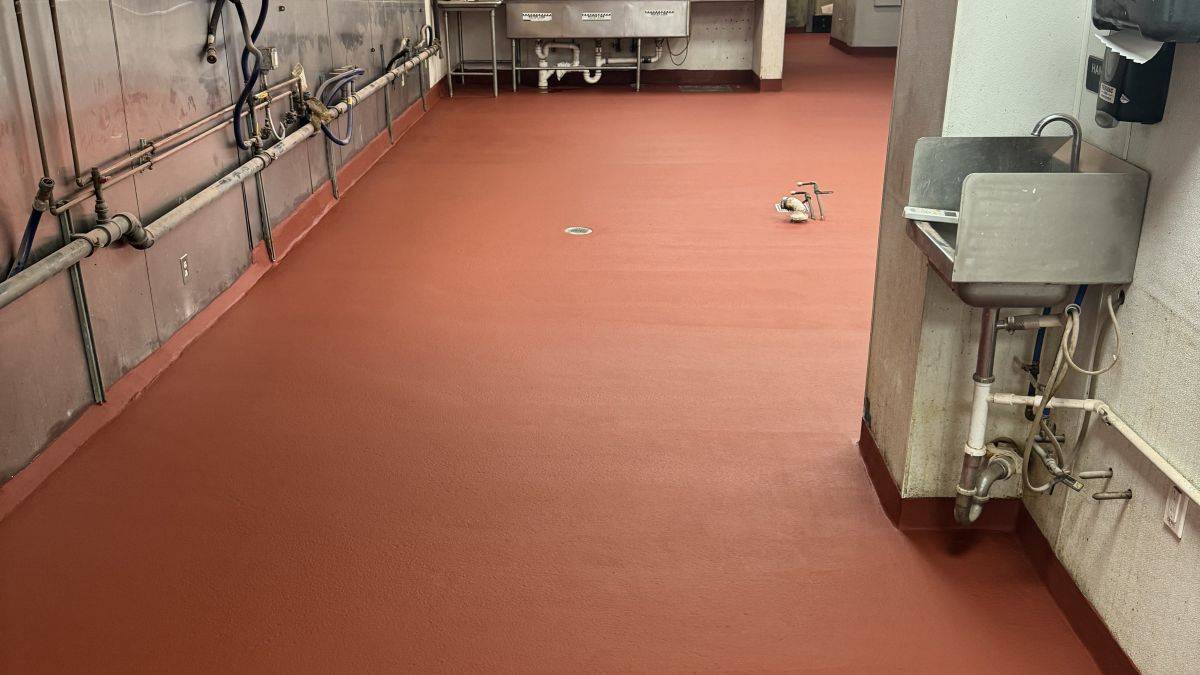
Industrial restaurant kitchen flooring installation in Edgewater NJ showing seamless slip-resistant epoxy surface.
Industrial restaurant kitchen flooring installation in Edgewater, NJ, showing substrate repairs for a high-durability epoxy system.

The HPS Difference: Technical Superiority

We don’t just “paint” your floor. We engineer it. Our 5-step installation process is built for longevity:

  1. Substrate Prep: We use 800-pound Sase units to grind and diamond-prep the concrete, ensuring a mechanical bond that won’t peel.

  2. Multi-Coat Systems: Unlike competitors who use a single coat, we apply a high-build system including a primer, base coat, and specialized topcoats.

  3. Fast Turnaround: We understand that downtime means lost revenue. We offer rapid-cure options to get your kitchen back in operation quickly.

Industrial restaurant kitchen flooring in Edgewater NJ featuring a seamless urethane concrete system.

Serving Edgewater, Weehawken, and Beyond

Whether you’re running a waterfront bistro in Weehawken or a high-volume catering facility in Edgewater, our team provides the local expertise needed to handle NJ’s unique commercial requirements.

Ready to upgrade your kitchen? Contact High Performance Systems today for a technical evaluation of your facility.

Note: We focus strictly on commercial and industrial projects. No residential inquiries, please.

Urethane Cement Flooring in Action: A Facility Manager's Story

We worked with a frozen food facility in Middlesex County that had a failed floor. They had a 48-hour window to get their production line back online. A standard epoxy system couldn’t cure fast enough. The concrete slab also had some moisture issues.

We installed a urethane cement system.

The crew finished the installation overnight. The floor was ready for forklift traffic by the next morning. It solved their moisture problem and got them back in business with zero lost production days. That’s the power of choosing the right material.

FAQs

What is urethane cement and how does it differ from epoxy?

 Urethane cement (or urethane concrete) combines resin technology with portland cement and aggregate. Unlike rigid epoxy, it has a thermal expansion coefficient similar to the concrete slab beneath it. This allows the floor to move with the slab during temperature swings, preventing cracking and delamination.

It is the only flooring solution that simultaneously addresses hygiene, safety, and durability. It creates a seamless, non-porous surface that meets USDA and HACCP standards by preventing bacterial growth in grout lines, while staying slip-resistant in wet conditions.

One of the biggest advantages of urethane systems is their ability to withstand high moisture vapor transmission (MVT). While epoxy often fails on wet slabs, urethane cement is breathable enough to bond permanently to concrete with high moisture content.

In commercial kitchens, floors are often blasted with boiling water during washdowns or located next to high-heat ovens and walk-in freezers. Thermal shock resistance ensures the flooring material won’t pop off the concrete when subjected to these rapid, extreme temperature changes.

Absolutely. While functionality is the priority for industrial kitchens, we can incorporate decorative quartz or flake finishes into the topcoat. This provides a professional, high-end look without compromising the heavy-duty performance of the system.